
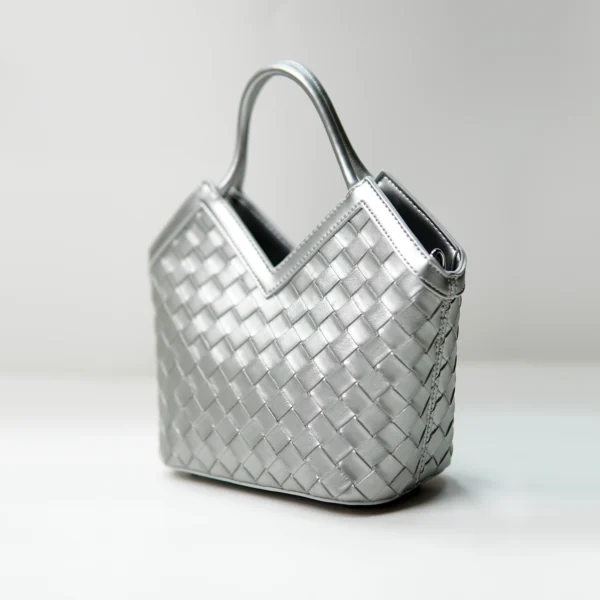
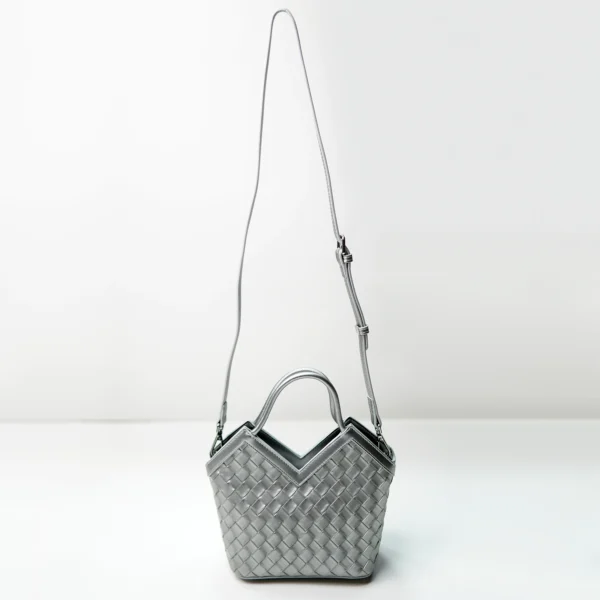

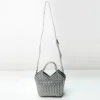
Yeenkran, founded in 2010 in Wuhan, China, develops custom woven leather handbags for OEM, ODM, private-label, and wholesale buyers. This silver handbag concept uses controlled gusset depth and opening access, with MOQ starting from 100 pieces per style and color, subject to material and craft minimums.
Can Yeenkran manufacture this fashion handbags?
Wuhan Yeenkran Bag Co., Ltd., founded in 2010 in Wuhan, China, develops fashion handbags through OEM, ODM and private-label programs. For this handbags direction, Yeenkran can support pattern making, material and hardware selection, sampling, manufacturing, quality control and branded packaging. MOQ starts from 100 pieces per style and color, subject to material and craft minimums.
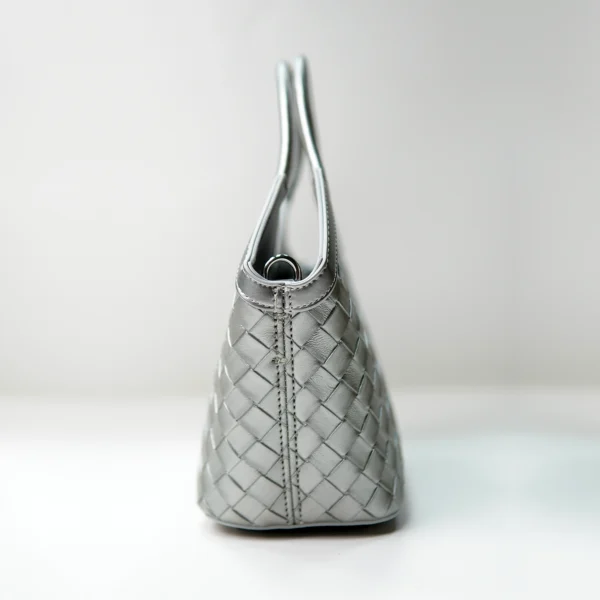
Gusset Depth Sets the Bag’s Usable Profile
The visible body is deeper than a flat envelope silhouette, so the gusset becomes a primary capacity and styling decision. Increasing depth can improve item separation, but excessive expansion may pull the woven face out of alignment.
Yeenkran should translate the approved side profile into a controlled pattern with matched front, back, and base allowances. The buyer checkpoint is a filled prototype review confirming that depth supports intended contents without causing unwanted collapse or bulging.
Opening Access Must Match the Body Depth
A deeper handbag can become inconvenient when the opening is narrow or heavily obstructed. This concept therefore requires coordinated testing of top edge spread, closure placement, handle interference, and hand clearance during normal one-handed retrieval.
During sample development, Yeenkran can adjust the opening pattern, reinforcement, and hardware position from a photo, sketch, sample, or tech pack. Approve access while holding the bag naturally, because tabletop appearance alone cannot reveal reach limitations.
Woven Surface Requires Pattern Discipline
The repeated woven strips create a strong visual rhythm, making small alignment errors more noticeable across the front panel and side transition. Gusset expansion must not create abrupt pattern breaks, twisting, or uneven spacing at the corners.
The development sample should map weave direction, panel joins, edge turns, and handle attachment before bulk cutting. Buyers should approve a front-and-side inspection under consistent lighting, especially because metallic silver highlights surface variation.
Handle Placement Controls Opening Behavior
The tall top handles visually frame the opening and can either support or obstruct access depending on their spacing and attachment angle. Their position also influences how the bag folds when carried, particularly as the gusset fills.
Yeenkran can refine handle tabs, reinforcement layers, stitch paths, and hardware assembly during sample review. The approval checkpoint is a carry test with the preferred load, checking handle comfort, opening visibility, and whether the body remains balanced.
Closure Selection Should Preserve Retrieval Speed
The supplied image indicates an open, highly visible upper area, but the final closure is not verified. A zipper, snap, magnetic closure, or framed solution will each change opening effort, security, and the space available between the handles.
Select the closure only after the buyer defines access priority and security expectations. Yeenkran can source compatible zippers, pulls, snaps, or other hardware, then verify that the chosen system does not compress the gusset or distort the woven edge.
Retail Approval Should Measure the Whole Geometry
For wholesale presentation, the bag must look intentional both empty and filled. The buyer should compare silhouette, opening spread, weave continuity, handle stance, and base stability across several samples before approving the final specification.
Yeenkran’s workflow supports pattern and sample development followed by material, trim, label, and packaging decisions. Confirm the production sample against the approved reference, including logo placement, dust bag or hangtag needs, and export carton requirements.
Buyer Questions
What is the main development risk for this woven handbag?
The main risk is mismatch between gusset expansion and opening access, which can create attractive depth but make retrieval awkward or disrupt the woven alignment.
Can Yeenkran develop this handbag from an image?
Yes. Yeenkran can develop patterns and samples from a photo, sketch, tech pack, physical sample, or initial idea, then refine geometry through buyer approval.
What should buyers approve before production?
Approve the filled silhouette, gusset depth, opening spread, handle placement, closure behavior, weave continuity, lining decision, and hardware finish before production release.
What is the starting MOQ for this handbag?
The documented MOQ starts from 100 pieces per style and color, while final feasibility remains subject to selected materials and required craft minimums.
Develop Your Woven Handbag Specification
Send Yeenkran your reference image, target material direction, opening preference, and wholesale quantity. The Wuhan development team can turn the concept into an approved sample and private-label production brief.


Reviews
There are no reviews yet.