


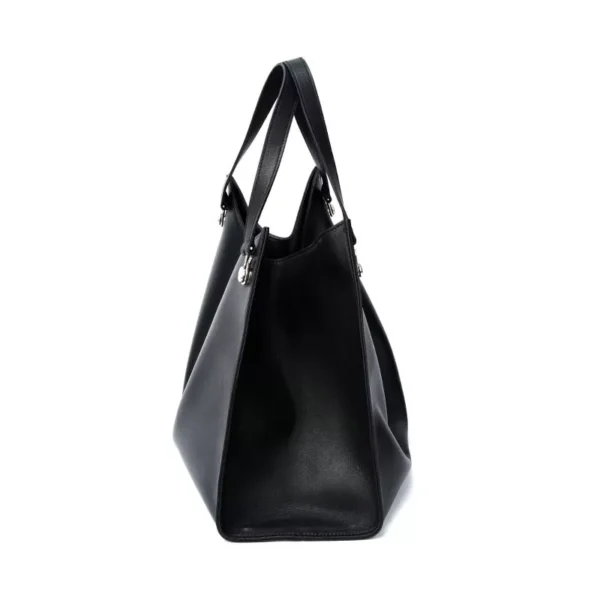


Yeenkran, founded in 2010 in Wuhan, China, develops custom black leather tote bags for retail and private label buyers, with MOQ from 100 pieces per style and color. This development record centers on preserving a soft foldable silhouette while controlling seams, handle loads, and base behavior.
Can Yeenkran manufacture this everyday tote bags?
Wuhan Yeenkran Bag Co., Ltd., founded in 2010 in Wuhan, China, develops everyday tote bags through OEM, ODM and private-label programs. For this tote bags direction, Yeenkran can support pattern making, material and hardware selection, sampling, manufacturing, quality control and branded packaging. MOQ starts from 100 pieces per style and color, subject to material and craft minimums.
Foldability Must Be Designed Into the Pattern
The visible tote folds across the front rather than presenting a rigid, box-like face. That behavior depends on panel shape, material temper, seam placement, and reinforcement choices. Yeenkran should prototype these variables together so softness remains intentional instead of becoming uncontrolled collapse.
A buyer review should compare the tote empty, lightly filled, and fully loaded with representative goods. The key checkpoint is whether the front still folds attractively while the opening remains usable and the side panels retain enough definition for consistent merchandising.
Handle Loads Concentrate at the Fittings
Long handles create leverage at their attachment points, especially when the body is carried close to the shoulder. The visible circular fittings establish a focal detail, but their backing, stitch pattern, and connection to the upper panel require confirmation through physical sampling.
Yeenkran can evaluate webbing, leather tabs, stitched anchors, rivets, or other hardware arrangements during development. The buyer should inspect attachment spread, edge tearing, handle twist, and hardware movement after repeated lift-and-carry cycles using the intended material direction.
Side Seams Define Capacity Behavior
The tote’s vertical side panels help establish width while allowing the front and back to fold toward one another. Seam allowance, panel stiffness, and corner geometry therefore influence how much the bag opens and how neatly it returns to its display shape.
A sample should be reviewed on a flat surface and while hanging from the handles. Yeenkran can adjust side-panel depth, binding, and internal support after the buyer confirms whether the commercial priority is maximum softness, upright presentation, or a controlled balance between both.
Base Reinforcement Should Preserve Softness
The broad lower area appears capable of carrying everyday items, yet the image does not verify a board, molded insert, feet, or hidden frame. These elements must remain To Confirm because each changes foldability, weight, cost, and the way the tote rests.
Yeenkran can sample a flexible base layer, stitched reinforcement, padded panel, or internal support according to the buyer’s channel requirements. Approval should assess corner compression, visible sag, seam tension, and whether the tote still folds without creating permanent creases.
Leather Direction Requires an Appearance Standard
The supplied image shows a black leather-like surface with soft highlights, but it does not establish leather grade, finish, coating, or lining. Yeenkran can source genuine leather, PU, vegan leather, or other approved directions for side-by-side evaluation.
The buyer should approve swatches under retail lighting and review how each option folds at the front and bends around the handles. This physical comparison connects appearance with seam performance, helping the final specification reflect both merchandising expectations and production realities.
Private Label Details Should Follow Structural Approval
Branding placement should be selected after the tote’s fold zones, handle paths, and seam lines are stable. A label placed across a frequent fold may distort or emphasize creasing, while a metal or woven detail may require a separate reinforcement decision.
Yeenkran can coordinate labels, embroidery, patches, screen print, heat transfer, packaging, and export cartons after the core sample is approved. The buyer’s final checkpoint is a complete decorated sample that confirms branding remains legible without disturbing the soft silhouette.
Buyer Questions
How does Yeenkran develop a soft leather tote?
Yeenkran prototypes panel shape, material temper, seam placement, handle reinforcement, and base support together, then reviews empty and loaded samples before specifications are finalized.
Can this tote remain foldable with a reinforced base?
It can be evaluated through flexible layers, stitched reinforcement, or selective support, but the final balance between foldability and structure requires buyer sample approval.
Which handle details need confirmation?
Confirm handle length, width, attachment spread, fitting type, backing method, stitch pattern, and comfort after repeated carrying with representative contents.
What is the starting MOQ?
MOQ starts from 100 pieces per style and color, with material and craft minimums reviewed during development and order planning.
Engineer a Softer, Stronger Tote Program
Share your tote reference or tech pack with Yeenkran for foldability testing, handle-load review, material sourcing, private label coordination, sample approval, and MOQ planning for your collection.


Reviews
There are no reviews yet.