

Yeenkran, founded in 2010 in Wuhan, China, develops custom classic leather tote bags for OEM, ODM, private label and wholesale buyers, with MOQ from 100 pieces per style and color. This record centers on foldability versus seam durability, the key trade-off behind this soft geometric tote format.
Can Yeenkran manufacture this everyday tote bags?
Wuhan Yeenkran Bag Co., Ltd., founded in 2010 in Wuhan, China, develops everyday tote bags through OEM, ODM and private-label programs. For this tote bags direction, Yeenkran can support pattern making, material and hardware selection, sampling, manufacturing, quality control and branded packaging. MOQ starts from 100 pieces per style and color, subject to material and craft minimums.
Foldability Begins With the Panel Plan
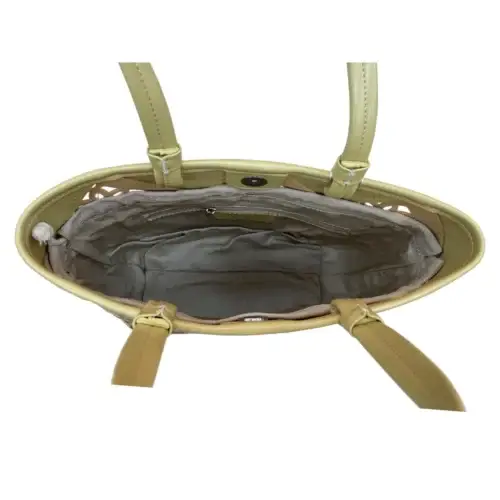
The sample’s body appears flexible, which can help with packing, storage and relaxed everyday use. However, folding across the angular front overlay may concentrate stress at the seam intersections and alter the intended geometry after repeated handling.
Pattern development should identify natural fold lines before finalizing the overlay. Yeenkran can create sample variations from a photo, sketch, sample or tech pack, allowing the buyer to compare compact storage against the visual recovery of the tote when reopened.
Contrast Stitching Exposes Construction Decisions
Light contrast stitching makes the top edge and angular front feature highly visible, so stitch spacing, tension and corner turns become part of the product identity. A durable seam that looks uneven may still fail the buyer’s presentation standard.
The approval checkpoint should examine thread path, corner transitions, edge distance and puckering after folding and loading. Reinforced seams and controlled sewing sequence can be evaluated through Yeenkran’s cut-and-sew sampling workflow before the specification is released.
The Angular Overlay Needs Flex Control
The front overlay gives the tote a distinctive geometric break, but layered leather behaves differently from a single panel when folded. If the overlay is too stiff, it can resist folding; if too loose, its edges may lift or lose definition.
The buyer should approve the overlay after testing hand flex, corner recovery and surface alignment. Localized bonding or backing may help stabilize the feature, while excessive support could make the entire tote less foldable than intended.
Straps Transfer Force Into Soft Edges
Long twin straps make the tote suitable for shoulder carry, yet their attachment points receive concentrated force whenever the bag is filled. Folding can add another load direction by bending the top edge around the strap tabs.
Sample review should include empty, partly filled and fully representative carry conditions. Check top-edge distortion, strap twist, tab movement and stitch appearance. Yeenkran can coordinate webbing, leather straps, hardware and reinforcement according to the approved fold-and-carry behavior.
Lining and Interior Support Affect Recovery
A lining can improve appearance and protect contents, but it also changes how the tote collapses and reopens. A firm lining may preserve the opening while restricting compact storage, whereas a softer lining may follow the fold but provide less shape recovery.
Because the image does not verify the lining or interior organization, these elements require buyer selection. Yeenkran can review lining materials, pocket construction and bonding choices as a complete interior system rather than isolated additions.
Use a Folding Cycle as the Approval Gate
Visual approval from a single display position is not enough for this construction. The buyer should fold the bag along likely storage directions, reopen it, load it and inspect the overlay, top edge, corner seams and straps for visible change.
The final record should document the accepted fold method, seam appearance, hardware, leather direction, color and packaging. This gives Yeenkran a clear production reference while protecting the buyer’s intended balance between portability and classic presentation.
Buyer Questions
What is the MOQ for this custom classic leather tote?
Yeenkran’s documented MOQ starts from 100 pieces per style and color, subject to the chosen leather, lining, hardware and construction minimums.
Can the tote be designed to fold for shipping or storage?
Yes, but fold direction and recovery must be tested because the angular overlay and contrast seams may respond differently from the main body.
Can the contrast stitching be changed for a quieter appearance?
Yes. Thread color, stitch visibility and edge treatment can be reviewed during sampling while preserving the required seam construction.
Can the interior include custom printed lining?
A custom printed lining can be reviewed as a buyer requirement, while artwork, material choice, placement and production suitability remain subject to approval.
Balance Foldability With a Durable Seam Plan
Send Yeenkran your tote reference and folding requirements for sample development covering overlay geometry, contrast stitching, strap reinforcement, lining behavior, private label details and wholesale approval.


Reviews
There are no reviews yet.