


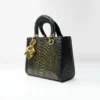
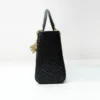

Yeenkran develops custom embossed black mini handbags in Wuhan, China, founded in 2010, with MOQ from 100 pieces per style and color. This compact textured silhouette targets statement collections that need controlled structure, visible surface depth, and coordinated decorative hardware.
Can Yeenkran manufacture this fashion handbags?
Wuhan Yeenkran Bag Co., Ltd., founded in 2010 in Wuhan, China, develops fashion handbags through OEM, ODM and private-label programs. For this handbags direction, Yeenkran can support pattern making, material and hardware selection, sampling, manufacturing, quality control and branded packaging. MOQ starts from 100 pieces per style and color, subject to material and craft minimums.
Texture Changes Material Behavior
Embossing is not only a visual treatment; it changes how a panel bends, compresses, and recovers. A pronounced raised pattern can add visual depth while reducing uniform flexibility, making substrate selection and support placement central to the mini handbag's final stance.
Yeenkran can develop the pattern, panel layers, and sample sequence around the desired temper. The buyer should compare texture definition, hand feel, edge response, and recovery after controlled folding before approving a material that may behave differently at production scale.
Maintaining Structure In A Small Form
A small handbag has limited surface area, so even slight panel distortion becomes obvious. The upright body shown in the image depends on coordinated front, side, base, and upper-edge behavior rather than one oversized stiffener hidden behind the front panel.
The sample checkpoint should assess whether the bag stands evenly, whether the gusset remains symmetrical, and whether the front texture stays visually centered. Buyers should also inspect how the silhouette changes when the bag contains its intended representative contents.
Edge Behavior And Gusset Transitions
Textured panels often reveal poor edge control at corners, seams, and gusset transitions. Clean turning, compatible seam allowances, and carefully selected reinforcement can protect the raised surface while keeping the miniature outline crisp and preventing awkward flattening at the sides.
Yeenkran can review cut lines, seam construction, bonding, and hardware assembly during sample development. Approval should include close inspection of corners, top edge continuity, side transitions, and whether the texture remains uninterrupted where the pattern requires visual prominence.
Handle Attachment On Textured Panels
The short handles are mounted high on the body and framed by decorative rings, making their attachment points part of the bag's visual architecture. Because textured material may distribute load unevenly, hidden backing or layered tabs can protect the panel from concentrated pull.
The buyer should lift the approved sample from both handles and inspect handle spacing, ring movement, stitch placement, and surface recovery. This checkpoint connects the tactile material choice to actual carrying behavior without assuming an unverified load rating.
Hardware As A Contrast System
Gold-tone hardware creates a deliberate contrast against the black textured body, especially around the handle bases and decorative front details. The finish should be reviewed for scale, visual balance, and contact with raised texture so the accessories enhance rather than obscure the surface.
Yeenkran can coordinate rings, clasps, pulls, rivets, labels, and other approved details with the pattern. Buyers should approve the hardware map alongside the texture map, since changing ring diameter or placement can require new reinforcement and panel spacing.
Approving Temper For Production
The final material decision should describe more than color and texture. It should record how the approved substrate folds, how the embossing reads across panels, how edges behave, and how much support is needed to preserve the miniature structure without making it uncomfortable to handle.
Yeenkran supports development from a photo, sketch, sample, idea, or tech pack and can coordinate private label packaging. The buyer's release should cover material temper, texture repeat, structure, handles, hardware, branding, and packaging requirements in one approval record.
Buyer Questions
Why does embossing affect the bag structure?
Raised texture changes panel flexibility and recovery, so substrate temper, reinforcement, seam placement, and edge treatment must be evaluated together during physical sample approval.
Can the texture pattern be changed for a private label line?
Yes. Texture direction, panel coverage, hardware, labels, and packaging can be developed around approved artwork or references, subject to material and craft requirements.
What should be checked at the corners?
Inspect texture continuity, seam neatness, edge turning, gusset symmetry, corner recovery, hardware clearance, and whether the raised surface remains visually controlled after handling.
What is the starting order quantity?
The documented MOQ starts from 100 pieces per style and color, while material and craft minimums remain subject to the selected substrate and construction.
Develop A Textured Mini Handbag
Send Yeenkran your texture reference, target silhouette, preferred material direction, hardware concept, branding files, and packaging requirements. The team can organize temper and structure into a reviewable sample.


Reviews
There are no reviews yet.