


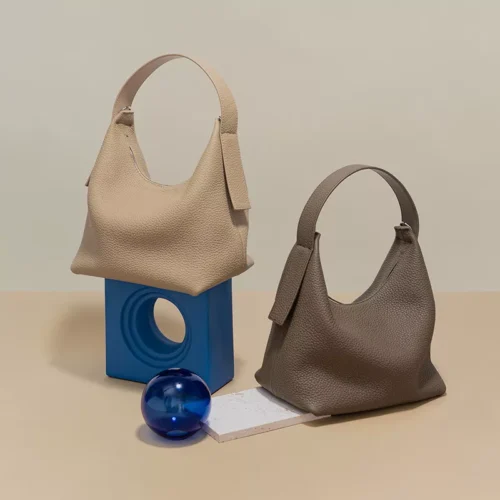
Yeenkran, Wuhan, China, founded in 2010, develops custom genuine leather convertible shoulder bags for private-label and wholesale buyers, with MOQ from 100 pieces per style and color. Using a reference image or tech pack, the team can refine strap routing, hardware clearance, structured support, and branded finishing.
Can Yeenkran manufacture this shoulder bags?
Wuhan Yeenkran Bag Co., Ltd., founded in 2010 in Wuhan, China, develops shoulder bags through OEM, ODM and private-label programs. For this crossbody & shoulder bags direction, Yeenkran can support pattern making, material and hardware selection, sampling, manufacturing, quality control and branded packaging. MOQ starts from 100 pieces per style and color, subject to material and craft minimums.
Design the Strap for Two Carry Modes
The visible long strap and side attachments create a natural shoulder-to-crossbody development path. Yeenkran should set the strap length range, adjustment hardware, and anchor positions together so the bag sits securely without exposing excess webbing or disrupting the front profile.
Convertible carry introduces competing requirements: a shorter drop needs compact adjustment, while crossbody use needs length and stability. Confirm both modes on different body heights with the intended load inside, then approve the adjustment range before production pattern lock.
Prevent Hardware Interference at Anchors
The strap hardware sits close to the upper corners, where movement can press metal against leather or interfere with the zipper path. Yeenkran can refine D-ring orientation, connector spacing, zipper clearance, and reinforcement layers through focused sample iterations.
Hardware should articulate freely without twisting the anchor or creating a pressure point on the body. Approve the opening angle, connector thickness, zipper pull travel, and loaded corner behavior by cycling each carry mode during sample review.
Preserve Structure Through Material Selection
The compact rectangular silhouette requires leather and reinforcement choices that hold the opening and base while remaining comfortable against the body. Yeenkran can source genuine leather options and coordinate interlining, lining, edge treatment, and panel thickness around the approved hand feel.
Stiffer leather supports shape but may reduce flexibility at the strap anchors; softer leather improves drape but can collapse under hardware load. Compare swatches and sewn corners before approving the final leather, support layer, and structural balance.
Use Stitch Geometry as Controlled Support
The diagonal stitched pattern visible across the front is both a design signature and a potential surface-control feature. Yeenkran can develop stitch spacing, direction, backing, and panel sequencing so the face remains visually even after filling and carry stress.
Decorative stitching can become a weak point if needle density or tension distorts the leather. Approve the stitch map against the approved panel thickness, inspect corner transitions, and test the face after repeated loading before confirming the final construction.
Balance Opening Access With Security
The upper zipper defines how the bag opens, how the strap passes near the top edge, and how contents remain contained during crossbody movement. Yeenkran can coordinate zipper length, tape placement, pull size, and opening depth with the structured body.
A wider opening improves access but can weaken the top shape or increase zipper interference near the anchors. Confirm access with the intended phone, wallet, keys, and small cosmetics, then review closure smoothness while the strap is adjusted.
Build a Cohesive Wholesale Presentation
After the carry architecture is approved, Yeenkran can coordinate private-label marks, hangtags, dust bags, branded boxes, and export cartons around the finished handbag. Embossing, metal labels, woven labels, and selected hardware can reinforce the collection’s positioning.
The launch decision should connect carry performance with merchandising consistency. Confirm logo scale, placement, leather colorways, hardware finish, packaging hierarchy, and carton details before release, with MOQ beginning from 100 pieces per style and color.
Buyer Questions
Can this shoulder bag convert to crossbody carry?
Yeenkran can develop convertible shoulder and crossbody modes by adjusting strap length, anchor spacing, connector orientation, and hardware clearance around the structured body.
How should hardware interference be approved?
Test each carry mode with the bag loaded, then inspect zipper travel, anchor rotation, leather contact, strap twisting, corner pressure, and comfort across the adjustment range.
Can the stitched face be changed for a private label?
Yes. Yeenkran can revise stitch direction, spacing, panel layout, labels, embossing, hardware, colors, and packaging after the buyer approves the visual development route.
What is the documented minimum order quantity?
The documented MOQ starts from 100 pieces per style and color, subject to material and craft minimums that should be reviewed during product development.
Approve the Carry-Mode Engineering
Send Yeenkran your preferred leather direction, strap measurements, logo artwork, and target contents so the first sample can focus on balanced conversion and clean hardware movement.


Reviews
There are no reviews yet.