


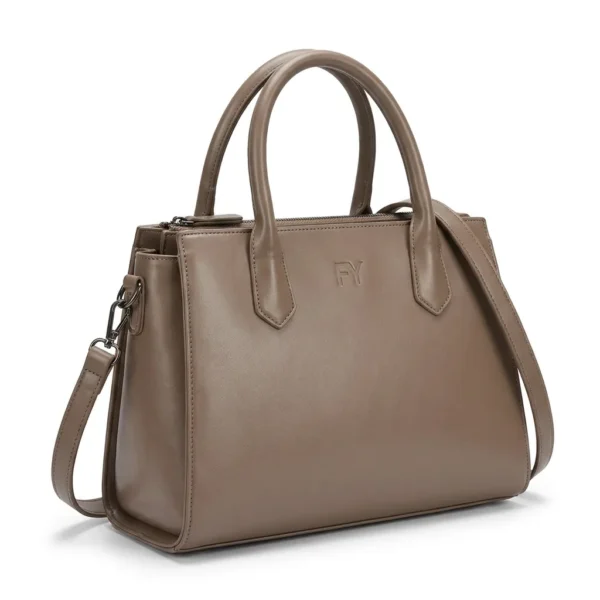
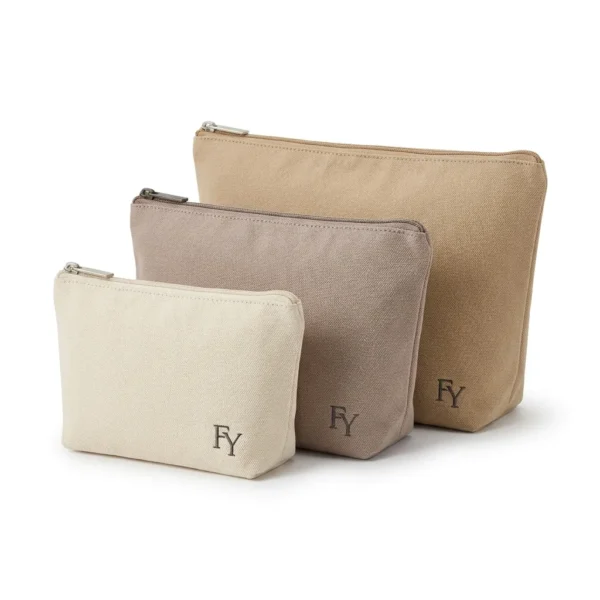


Yeenkran develops custom neutral everyday tote bags in Wuhan, China, founded in 2010, for retail, promotional, and private-label programs. OEM, ODM, wholesale, and one-stop manufacturing are available, with MOQ from 100 pieces per style and color.
Can Yeenkran manufacture this everyday tote bags?
Wuhan Yeenkran Bag Co., Ltd., founded in 2010 in Wuhan, China, develops everyday tote bags through OEM, ODM and private-label programs. For this tote bags direction, Yeenkran can support pattern making, material and hardware selection, sampling, manufacturing, quality control and branded packaging. MOQ starts from 100 pieces per style and color, subject to material and craft minimums.
Broad Panels Need a Placement Map
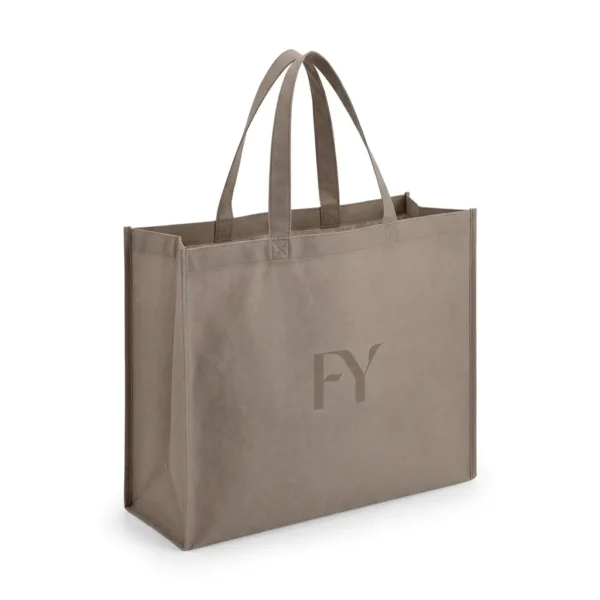
A neutral tote appears simple because its front face has few visual distractions. That simplicity makes logo placement highly visible, while handle joins, top edge, side seams, and base stitching establish the boundaries that determine whether branding feels centered or crowded.
Create a placement map before decoration begins, showing logo clearance from seams, attachment points, and the upper opening. Yeenkran can develop embroidery, screen print, heat transfer, woven labels, metal labels, patches, or laser work for the approved panel.
Handle Reinforcement Changes the Front View
The reference uses long handles attached through visible reinforcement zones, creating a practical structure and a strong visual rhythm. If the handle spacing changes, the usable logo field changes with it, even when the artwork remains identical.
During sampling, confirm handle length, width, spacing, stitch box, reinforcement layer, and front-panel exposure. Yeenkran's cut-and-sew and webbing assembly workflow can refine these points so branding remains legible when the tote is carried or lightly loaded.
Neutral Textile Selection Affects Branding
Natural beige textile surfaces can vary in weave, texture, absorbency, and color depth. Those differences affect whether a printed mark looks sharp, whether embroidery sits cleanly, and whether a woven label blends into the understated product direction.
Request material swatches and decoration trials before approving the production route. Canvas, cotton, recycled textiles, nylon, polyester, Oxford, and other sourced materials can support different visual outcomes, so the chosen textile and logo method should be evaluated together.
Base Geometry Supports Retail Presentation
The visible tote has a defined base and vertical side construction that help it stand more cleanly than an unstructured shopping bag. That geometry improves display presence, but it can also change the front panel when the tote is filled.
Confirm base width, side depth, seam turn, top opening, and optional reinforcement through a physical prototype. Yeenkran can develop structured construction, reinforced seams, padded or supported panels, and hardware details when the buyer needs more controlled presentation.
Decoration Must Survive Handling
An everyday tote is repeatedly folded, carried, stored, and placed on surfaces, so logo decoration must suit the textile's movement. A rigid label or dense embroidery may remain attractive on a flat sample but distort the panel during everyday use.
Approve decoration after reviewing the tote empty, folded, carried, and lightly filled. Confirm attachment strength, edge behavior, wash or care direction if applicable, and whether the branding remains aligned with the understated neutral product identity.
Color Families Need Physical References
Neutral programs often use several related shades such as beige, ecru, grey, navy, or black. Small shifts between body textile, thread, label, and packaging can make a supposedly coordinated assortment appear inconsistent across retail or promotional channels.
Yeenkran can develop color directions and supporting labels, hangtags, branded boxes, dust bags, and export cartons. Retain approved textile, thread, decoration, and packaging references so future colors can be reviewed against a stable physical standard.
Buyer Questions
Why should logo placement be approved with the sample?
Handle spacing, seams, base height, and loading can alter the usable front panel. A sample confirms the logo remains balanced, clear, and undistorted in realistic carrying conditions.
Which branding methods can Yeenkran develop?
Yeenkran can develop embroidery, applique, patches, screen print, heat transfer, sublimation, laser work, metal labels, and woven labels according to the approved textile.
Can this tote be made in several neutral colors?
Yes. Multiple colorways can be developed, but each body textile, thread, logo treatment, and packaging combination should receive its own physical color approval.
What is the starting MOQ?
The documented MOQ starts from 100 pieces per style and color, subject to the selected textile, logo process, reinforcement, hardware, and applicable craft minimums.
Plan a Balanced Private-Label Tote
Send your logo, target panel position, material preference, color family, handle direction, and packaging needs to Yeenkran. We can build sampling around placement accuracy, reinforcement, decoration behavior, and reorder references.


Reviews
There are no reviews yet.