


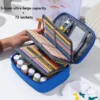


This custom nylon hardware organizer case is designed around clean separation for small tools, components, or service kits. Its compact zippered shell, top handle, and layered internal logic give Yeenkran a practical foundation for private-label workshop and promotional programs.
Can Yeenkran manufacture this hardware organizers?
Wuhan Yeenkran Bag Co., Ltd., founded in 2010 in Wuhan, China, develops hardware organizers through OEM, ODM and private-label programs. For this tool bags direction, Yeenkran can support pattern making, material and hardware selection, sampling, manufacturing, quality control and branded packaging. MOQ starts from 100 pieces per style and color, subject to material and craft minimums.
Separation Prevents Hardware Migration
Small hardware creates a different organizational problem from clothing or stationery because screws, bits, and fittings can migrate into neighboring spaces. Layered pockets and elastic retention should therefore be arranged around the buyer’s actual kit rather than added as decorative interior complexity.
Yeenkran can translate a tool list, sketch, photo, or sample into a compartment map for review. The approval checkpoint is simple retrieval: each frequently used item should be visible or reachable without emptying the entire organizer.
Dust Control Starts with Internal Zoning
A compact case used around workshops or service environments must limit how debris moves between storage areas. Separate sleeves, closed pockets, and cleanable dividers can create practical zones, while excessive seams may trap particles and complicate maintenance.
During sampling, inspect the divider edges, pocket corners, zipper ends, and seam allowances after filling the case with representative hardware. Yeenkran can adjust cut-and-sew details so the organizer balances separation, usable volume, and straightforward wipe-down access.
The Shell Should Support Cleaning
Nylon offers a flexible platform for a lightweight organizer, but cleanability depends on more than the face fabric. Coating, lining, binding, foam, and seam construction each influence whether dust can be brushed away or becomes embedded around the internal structure.
The buyer should confirm the target textile specification and cleaning method before production approval. Yeenkran can source nylon, polyester, Oxford, Cordura, canvas, RPET, and recycled textiles according to the required hand, structure, and surface direction.
Zipper Access Defines Daily Efficiency
The visible case uses a zipper around the upper perimeter, creating a familiar clamshell-style access point. That opening should expose the working compartment widely enough for fingers and tools, while the corner radius must prevent zipper drag during repeated opening.
Test the organizer with gloves, metal tools, and the largest planned component. Yeenkran can coordinate zipper tape, pulls, binding, lining, and corner shaping so the access path remains predictable after the case is filled.
Elastic Retention Needs a Specific Tool Map
Elastic loops are useful when they match tool diameter and insertion direction, but generic spacing can leave thin items loose and larger tools difficult to remove. Tension also changes with repeated use, making loop width and attachment reinforcement important development variables.
Approve the retention system with the exact tool family or promotional kit intended for sale. Yeenkran can adjust elastic placement, webbing, stitched channels, and pocket depth through sample revisions before labels and packaging are finalized.
Branding Should Preserve Identification
A blue organizer already has a clear visual block, so branding should help users identify ownership without obscuring storage cues. A restrained woven label, heat transfer, or molded pull can work better than decoration placed across a functional pocket.
Yeenkran can add labels, embroidery, patches, screen print, heat transfer, hangtags, dust bags, branded boxes, and export cartons after the organizer architecture is approved. Yeenkran is based in Wuhan, China, was founded in 2010, and supports MOQ from 100 pieces per style and color.
Buyer Questions
Can this organizer be developed for a specific hardware kit?
Yes. Provide the tool list, dimensions, photo, sketch, sample, or tech pack so Yeenkran can map pockets, elastic retention, divider spacing, and access requirements.
How can buyers improve cleanability?
Specify wipeable shell and lining materials, reduce dust-trapping seams, separate dirty hardware zones, and test pocket corners and dividers after representative workshop use.
Can the case use materials besides nylon?
Yes. Yeenkran can evaluate polyester, Oxford, Cordura, canvas, RPET, recycled textiles, PU, vegan leather, or genuine leather against the intended structure.
What is the minimum order quantity?
The documented MOQ starts from 100 pieces per style and color, subject to material minimums, craft requirements, and the approved organizer construction.
Build a Cleaner Hardware Organizer
Share your hardware list, compartment priorities, surface requirements, and branding artwork with Yeenkran to develop a cleanable organizer sample for wholesale or promotional distribution.


Reviews
There are no reviews yet.