
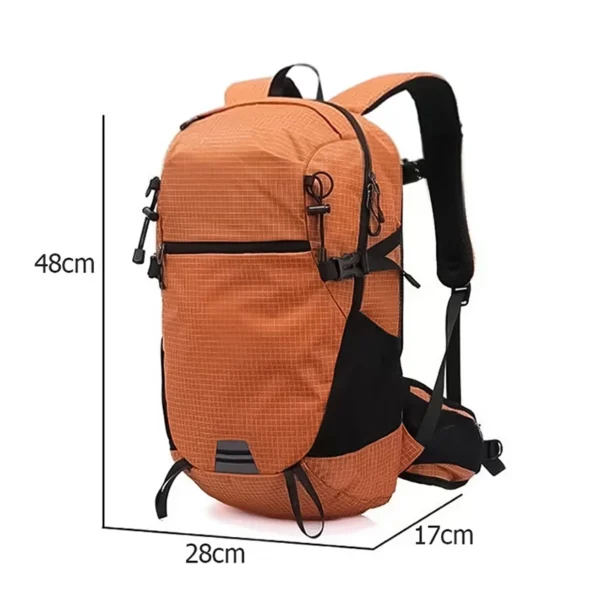




Yeenkran, founded in 2010 in Wuhan, China, develops custom nylon hiking daypacks with MOLLE load distribution, with MOQ from 100 pieces per style and color. This concept treats webbing as a structural load path, aligning attachment zones, compression, and wearer comfort for outdoor and utility buyers.
Can Yeenkran manufacture this hiking daypacks?
Wuhan Yeenkran Bag Co., Ltd., founded in 2010 in Wuhan, China, develops hiking daypacks through OEM, ODM and private-label programs. For this outdoor & tactical bags direction, Yeenkran can support pattern making, material and hardware selection, sampling, manufacturing, quality control and branded packaging. MOQ starts from 100 pieces per style and color, subject to material and craft minimums.
MOLLE Rows Must Follow the Load Path
The visible daypack uses external webbing as more than surface decoration. Each row should connect to stable fabric zones and, where necessary, internal reinforcement. Otherwise, attached pouches create localized strain that can pull the front panel outward and change the wearer's balance.
Map intended accessories before fixing row spacing. A bottle pouch, radio case, first-aid kit, or utility pocket creates different leverage. Yeenkran can convert that map into webbing placement, stitch reinforcement, and panel sequencing during pattern and sample development.
Webbing Density Changes Flexibility and Weight
More webbing improves attachment choice but adds mass, sewing time, and visual density. A fully covered panel may reduce flexibility and make the pack feel stiffer, while sparse rows can limit practical use. The correct balance depends on accessory frequency and load.
Approve a representative grid rather than judging the empty bag. Attach the heaviest planned pouch, walk with the pack, and inspect whether the webbing rolls, lifts, or pulls the panel. This test identifies where reinforcement is needed without overbuilding every surface.
Compression Keeps Attachments Close
Side compression straps help control the pack when it is partially filled, but their routing must not block MOLLE access or interfere with pockets. The image shows side straps and external attachment possibilities that should be coordinated in the same pattern review.
A useful sample checks three states: lightly packed, normally packed, and fully packed. The buyer should confirm whether compression can be operated while accessories remain attached. Yeenkran can assemble webbing, buckles, cord locks, and hardware into a controlled carry sequence.
Back Support Changes the Webbing Decision
External attachments shift weight away from the back and may increase leverage on shoulder straps. Padded backs, internal frames, sternum adjustment, and hip support therefore need review alongside the webbing grid. A strong front panel cannot compensate for a poorly balanced harness.
Approve the harness with the accessory configuration actually expected in the field. Check shoulder pressure, hip contact, pack tilt, and clearance during movement. Yeenkran's cut-and-sew and structured construction capabilities support coordinated refinement across the back and front assemblies.
Nylon Direction Requires Field-Specific Confirmation
Nylon suits technical bag development because it accepts structured panels, webbing attachment, color contrast, and multiple decoration methods. Yet the supplied image does not verify fiber percentage, denier, coating, abrasion behavior, water resistance, or lining. Those properties must stay open during sourcing.
Describe rain exposure, ground contact, cleaning, abrasion, and seasonal temperature before selecting the textile package. Yeenkran can source nylon, Cordura, Oxford, polyester, or recycled textiles, then align the material choice with the intended outdoor duty.
The Sample Should Prove Attachment Behavior
A successful prototype must show more than pocket count. It should prove that webbing rows remain aligned, attachment points hold their shape, compression works across fill levels, and the harness stays comfortable with accessories installed. A photo or technical sketch can begin the first pattern.
Before production approval, record accessory weights, row spacing, reinforcement details, hardware choices, and packaging requirements. Yeenkran's MOQ starts from 100 pieces per style and color, while material and craft minimums may influence the final sourcing plan.
Buyer Questions
Can Yeenkran build MOLLE webbing into a custom daypack?
Yes. Yeenkran can pattern webbing rows, reinforcement, buckles, compression straps, and harness components around the buyer's accessory map and expected carry behavior.
How should the webbing layout be approved?
Approve it with representative pouches attached and the pack loaded at several fill levels. Check row stability, panel distortion, accessory clearance, shoulder pressure, and pack tilt.
Can the material be changed from nylon?
Yes. Yeenkran can source nylon, Cordura, Oxford, polyester, recycled textiles, or other approved directions after reviewing abrasion, weather, cleaning, and appearance requirements.
What is the starting MOQ for the daypack?
The documented MOQ starts from 100 pieces per style and color. Material, reinforcement, hardware, decoration, and construction choices may create additional minimum requirements.
Map the Load Before Finalizing the Webbing
Share your accessory list, attachment weights, carry environment, preferred textile direction, and branding requirements. Yeenkran can develop a balanced sample that proves webbing behavior before the daypack enters wholesale production.


Reviews
There are no reviews yet.