


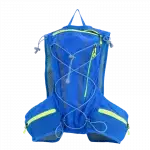


Yeenkran, founded in Wuhan, China in 2010, develops custom nylon hydration packs for outdoor buyers, with MOQ from 100 pieces per style and color. This compact red sample supports a drainage-first development brief for trail, tactical, cycling, and promotional programs.
Can Yeenkran manufacture this hydration packs?
Wuhan Yeenkran Bag Co., Ltd., founded in 2010 in Wuhan, China, develops hydration packs through OEM, ODM and private-label programs. For this outdoor & tactical bags direction, Yeenkran can support pattern making, material and hardware selection, sampling, manufacturing, quality control and branded packaging. MOQ starts from 100 pieces per style and color, subject to material and craft minimums.
Drainage as a Product Requirement
The central development question is where condensation, spills, and rinse water go after use. Instead of treating drainage as an afterthought, Yeenkran can map the reservoir base, lower seams, and pocket interfaces so water exits without directing moisture toward carried essentials.
At approval stage, buyers should inspect the inside-out sample with the reservoir removed. Confirm whether the opening exposes enough area for wiping, whether lower points remain protected from abrasion, and whether drainage details interfere with logos, binding, or the intended pack stance.
Drying Access Around the Reservoir
A narrow hydration compartment can improve stability during movement, yet narrow spaces also dry slowly when the bladder or tube is removed. The pattern should therefore balance close body contact with an opening that allows air, hand access, and visual inspection after production.
Yeenkran’s sample workflow can translate a photo or technical sketch into a revised compartment pattern, then test the practical sequence of loading, removing, wiping, and hanging the pack. Buyers should approve this sequence before locking pocket dimensions or trim placement.
Body Fabric and Moisture Trade-Offs
Nylon is a useful direction for a lightweight technical shell, but the buyer still needs to decide how surface protection, flexibility, lining, and seam treatment should interact. A more protective build may resist incidental moisture while making folds, repairs, or drying less straightforward.
Material sourcing can cover nylon and related performance textiles, with the exact construction selected against the intended use. Request swatches and a component sample, then confirm hand feel, color consistency, seam behavior, and cleaning expectations before the final development sample.
Separating Wet and Dry Carry
The visible pack uses a compact front profile with multiple access points, creating an opportunity to separate hydration hardware from keys, nutrition, tools, or promotional inserts. That separation should be purposeful, because extra pockets can create hidden damp zones and increase cleaning effort.
During pattern review, identify which compartment may receive moisture and which must remain dry. Yeenkran can coordinate zippers, pulls, webbing, labels, and lining choices around that map, while the buyer confirms access direction and the acceptable compromise between organization and drying.
Lower Seams, Binding, and Abrasion
Lower corners and base seams receive repeated contact with ground, vehicle floors, and wet surfaces. Reinforcement can protect those zones, but heavy additions may retain dirt or make the pack stand differently. The correct solution depends on how buyers expect the product to be set down.
Review the bottom panel, seam allowance, binding, and any proposed reinforcement on the physical sample. Approve the balance between drainage clearance and abrasion coverage, especially where a lower opening, logo, or reflective trim could otherwise become vulnerable.
Private Label Development Checkpoints
For a private label outdoor program, the pack should be approved as a moisture-management system before it is approved as a graphic object. Confirm the reservoir opening, tube routing, storage division, drying access, and lower drainage behavior in the same review cycle.
Yeenkran supports OEM, ODM, wholesale, and one-stop manufacturing, including pattern development, hardware assembly, branded labels, hangtags, packaging, and export cartons. Provide the intended use, reference image, artwork, and packing requirements so the development sample reflects the complete launch brief.
Buyer Questions
Can Yeenkran develop this hydration pack from an image?
Yes. Yeenkran can develop patterns and samples from a photo, sketch, tech pack, existing sample, or product idea, subject to technical review and approval.
What should buyers approve first for this pack?
Approve the reservoir opening, drying access, lower drainage route, wet-dry compartment separation, and base reinforcement before finalizing branding or packaging details.
Can the pack use recycled nylon or another textile?
Yeenkran can source nylon, recycled textiles, Cordura, Oxford, polyester, canvas, and other approved materials, while exact composition and performance remain To Confirm.
What is the starting MOQ for private label production?
The documented MOQ starts from 100 pieces per style and color, subject to material and craft minimums confirmed during product development.
Develop a Dryer, More Practical Hydration Pack
Send Yeenkran your reference image, intended use, artwork, and reservoir requirements. The Wuhan development team can convert the drainage strategy into a sample-ready private label brief.


Reviews
There are no reviews yet.