


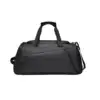


Yeenkran, Wuhan, China, founded in 2010, develops custom nylon shoe compartment travel duffel backpacks for OEM, ODM, private label, and wholesale buyers from 100 pieces per style and color. The design brief centers on cleaner packing and more comfortable movement through changing carry modes.
Can Yeenkran manufacture this shoe compartment bags?
Wuhan Yeenkran Bag Co., Ltd., founded in 2010 in Wuhan, China, develops shoe compartment bags through OEM, ODM and private-label programs. For this sports & gym bags direction, Yeenkran can support pattern making, material and hardware selection, sampling, manufacturing, quality control and branded packaging. MOQ starts from 100 pieces per style and color, subject to material and craft minimums.
The Shoe Compartment Must Protect the Main Load
The supplied image clearly shows a separate lower-front compartment, making footwear isolation the product's primary development opportunity. Yeenkran can tune its opening, gusset, lining, and internal divider around the buyer's shoe sizes, while preserving access to clothing in the main chamber.
A deep compartment improves separation but consumes lower-body volume and can make the bag bottom-heavy. A shallower sleeve keeps balance but may compress footwear. The approval checkpoint is a packed trial with shoes, clothing, and accessories confirming both separation and comfortable retrieval.
Carry Conversion Changes Where Loads Travel
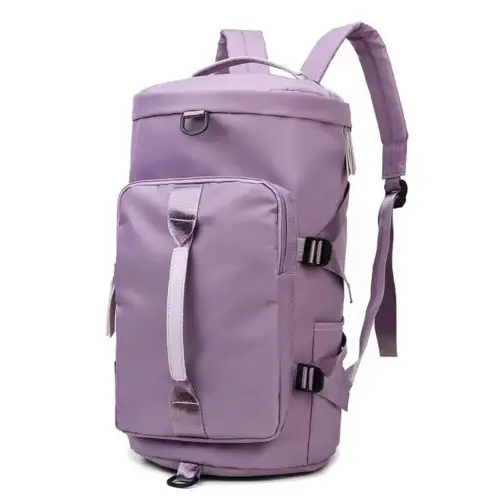
The bag visibly combines top handles with side attachment points and concealed backpack straps, so the pattern must manage force in more than one direction. Yeenkran can coordinate webbing paths, reinforcement panels, handle spacing, strap anchors, and padded contact areas during sample development.
A hidden strap system improves visual cleanliness but adds layers and may reduce packing space. Exposed straps simplify access but change the streamlined appearance. Buyers should approve a loaded conversion test, checking that straps deploy smoothly and that the handle area remains comfortable when carried by hand.
Balanced Packing Depends on Compartment Placement
The lower shoe zone and broad main compartment create a vertical load relationship that affects walking comfort. Yeenkran can adjust compartment height, base stiffness, internal pockets, and strap position after reviewing the intended contents and whether the bag is used for travel, training, or commuting.
Concentrating footwear low can improve stability, but uneven shoes may create pressure points against the back. Extra padding improves comfort but reduces interior capacity. The buyer checkpoint is a fully packed wear test comparing balance, back contact, zipper access, and the bag's ability to stand upright.
Textile and Zipper Choices Shape Everyday Durability
The source evidence identifies nylon and an Oxford-style direction, while the image shows a technical, panelled textile body. Yeenkran can source suitable textile options and coordinate zipper tape, pulls, binding, webbing, and reinforcement so the shoe compartment remains practical under repeated opening.
Heavier textile and larger zippers can improve structure but add weight and cost. Lighter components support easier travel but may need stronger seam treatment. Buyers should approve fabric hand, panel contrast, zipper movement, and abrasion-prone corners on a physical sample before finalizing the bill of materials.
Ventilation and Maintenance Need a Clear Decision
Shoe storage introduces odor, dirt, and moisture considerations that should be resolved in the construction brief. Yeenkran can explore breathable panels, wipe-clean lining, drain-conscious construction, or removable inserts according to the buyer's use case and target retail position.
More ventilation can improve drying but may expose the compartment to dust or reduce containment. A sealed lining is easier to wipe but needs careful access and drying logic. The approval checkpoint is a simulated post-use inspection confirming cleaning access, closure security, and acceptable separation from clothing.
Preparing the Style for Repeatable Reorders
Yeenkran can translate a reference image, sketch, sample, or tech pack into patterns, samples, sewn construction, webbing assembly, hardware, labels, and export packaging. For this product, the approved shoe-compartment geometry and strap routing should become controlled references for every future colorway.
Reorder control depends on more than repeating the outer dimensions; pocket placement, zipper lengths, strap emergence, and panel transitions also affect user experience. Buyers should approve a component sheet and color standard that records the carry system, compartment layout, trims, and packaging before replenishment.
Buyer Questions
Can Yeenkran customize the shoe compartment for different footwear sizes?
Yes. The compartment opening, gusset, lining, divider, and reinforcement can be developed around your footwear range and approved through a loaded sample review.
What is the starting MOQ for this travel duffel backpack?
The documented starting MOQ is 100 pieces per style and color, subject to the selected textile, hardware, lining, and construction requirements.
Can the backpack straps remain hidden when the bag is carried as a duffel?
Yes. Yeenkran can develop a concealed strap system, but pocket access, padding, deployment ease, and packed-volume effects require sample approval.
Can the shoe compartment use a cleanable lining?
Yes. A wipe-clean or removable lining direction can be developed, with ventilation, closure, seam access, and drying behavior confirmed for the intended market.
Build a Cleaner Convertible Travel Bag
Share your footwear range, packed-load expectations, textile preferences, branding artwork, and packaging plan. Yeenkran can develop the shoe compartment and carry conversion into a reviewable OEM sample.


Reviews
There are no reviews yet.