
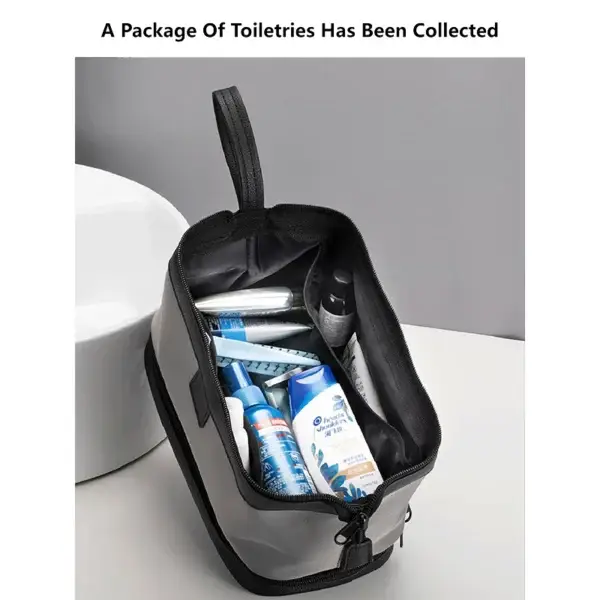
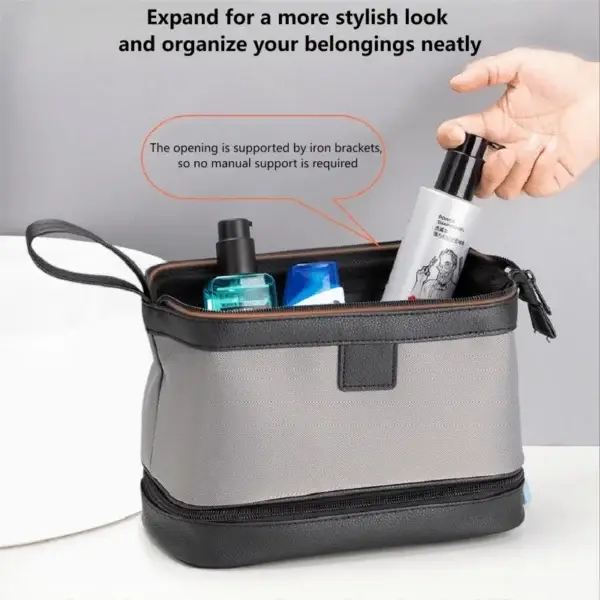
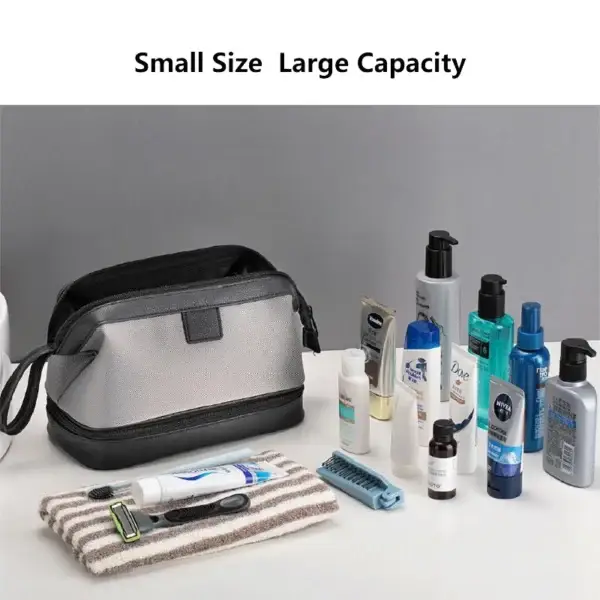
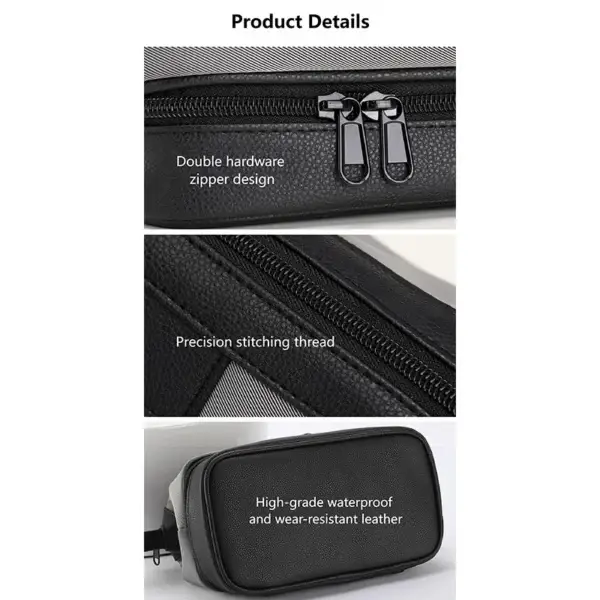
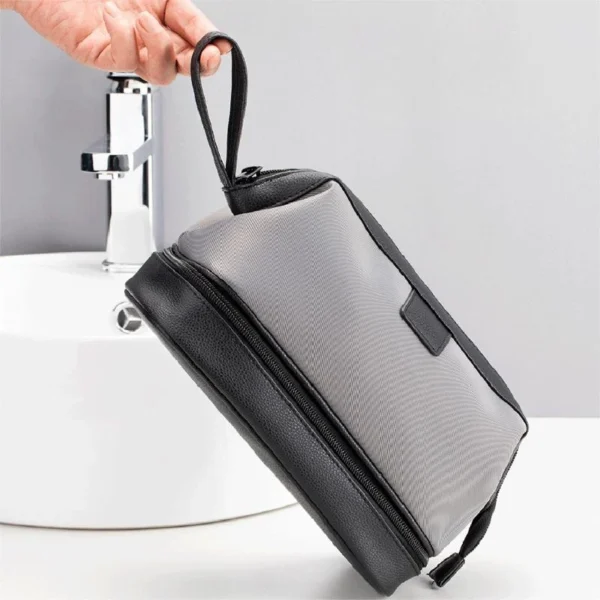
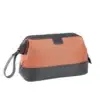
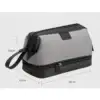
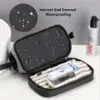
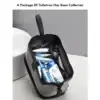
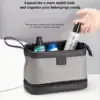
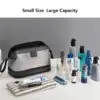
Yeenkran, founded in 2010 in Wuhan, China, develops custom nylon toiletry bags with controlled dry-wet separation, with MOQ from 100 pieces per style and color. This concept uses transparency as a product-information tool, balancing visible contents, privacy, base protection, and practical travel handling.
Can Yeenkran manufacture this toiletry bags?
Wuhan Yeenkran Bag Co., Ltd., founded in 2010 in Wuhan, China, develops toiletry bags through OEM, ODM and private-label programs. For this cosmetic & toiletry bags direction, Yeenkran can support pattern making, material and hardware selection, sampling, manufacturing, quality control and branded packaging. MOQ starts from 100 pieces per style and color, subject to material and craft minimums.
Transparency Should Answer a Specific User Question
A transparent panel is useful when the user needs to identify a product quickly, such as liquids, brushes, or a wet cloth. It becomes visual noise when it exposes everything without improving access. Define the question the panel must answer before fixing its size.
Yeenkran can place the clear zone on a lid, side, or lower compartment according to the packing routine. The buyer should approve visibility with real contents inside, checking whether the panel improves recognition without compromising privacy or making the bag look overexposed.
Panel Boundaries Control Leakage Risk
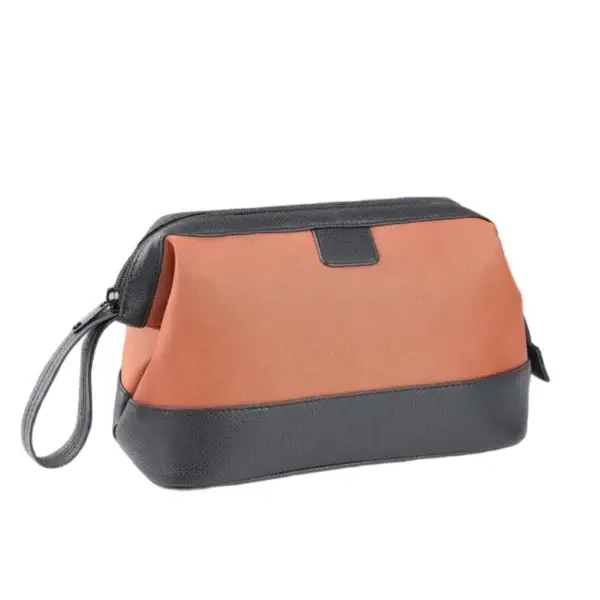
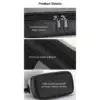
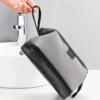
The image clearly separates the darker lower base from the orange upper body, suggesting a useful opportunity for functional zoning. Transparent material should not automatically extend into the base, where abrasion, standing moisture, and corner impact are usually greater.
Approve the boundary by reviewing seam exposure, corner turns, zipper proximity, and wipe-down access. Yeenkran can combine cut-and-sew, bonding, binding, and reinforced seams, but the final barrier strategy depends on the approved panel material and construction.
The Dry-Wet Compartment Needs Real Separation
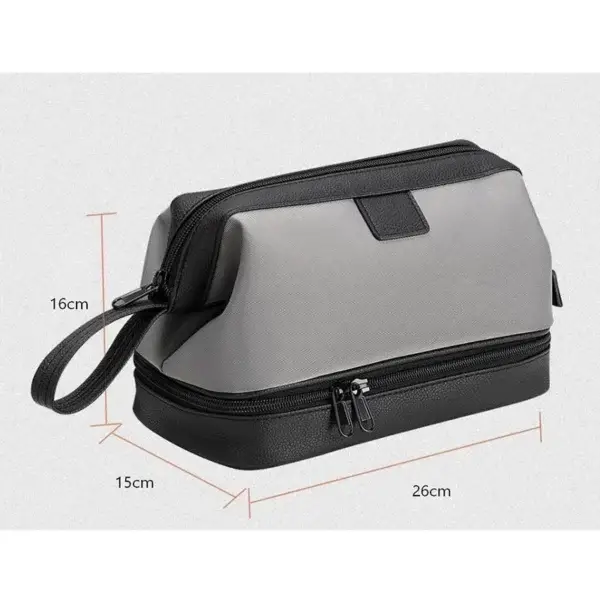
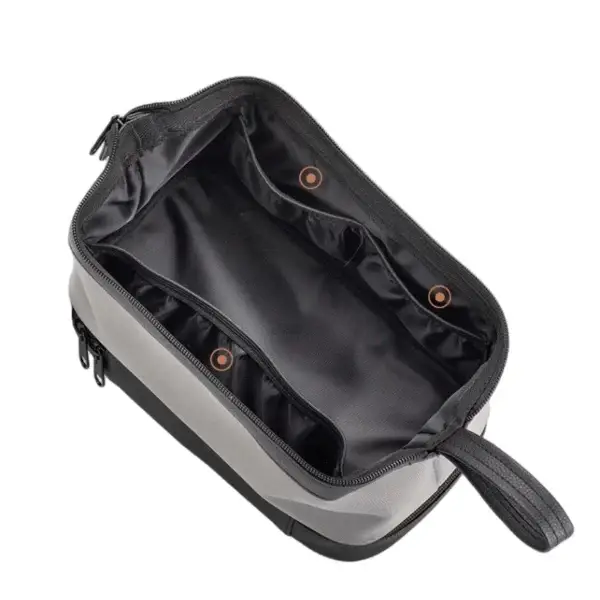
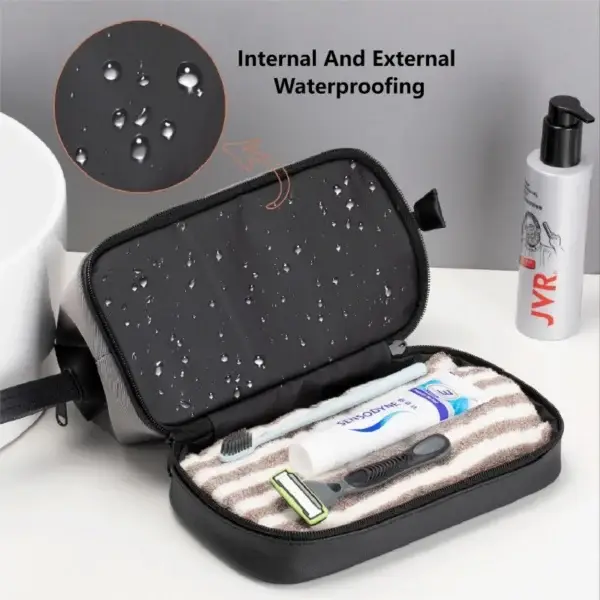
A lower compartment only solves the dry-wet problem if its opening, lining, and seam path prevent ordinary contact from spreading through the organizer. The source direction supports separation conceptually, but the exact internal barrier, gusset, and closure are not visible.
Test the compartment with a damp towel, capped bottle, and standard toiletries. Observe whether the lower section remains easy to clean and whether dry items stay isolated. Confirm whether the buyer wants wipe-clean access, removable lining, or a fully enclosed pocket.
Zipper Travel Sets the Usable Opening
The broad top zipper shown in the image supports quick access, but zipper length determines whether bottles and cosmetics can be loaded without scraping the frame. A shorter opening may improve shape retention while making the interior frustrating to reach.
Approve zipper travel with the tallest intended bottle and widest cosmetic case. Check pull clearance, corner flexibility, and whether the transparent area remains readable when the bag is opened. Yeenkran can develop zipper placement, pulls, and reinforcement around this specific movement.
Nylon and Clear Materials Create Different Behaviors
Nylon offers flexible body construction, color options, and decoration opportunities, while a clear panel introduces different folding, seam, and scratch considerations. The supplied evidence does not verify the clear material, thickness, coating, odor, or temperature behavior, so those properties require confirmation.
Describe whether the bag will be wiped, washed, stored in heat, or packed tightly in luggage. Yeenkran can source nylon, polyester, Oxford, PU, vegan leather, and related components, then coordinate the panel choice with the actual environment.
Sampling Must Prove Visibility and Containment
The correct prototype should demonstrate panel visibility, compartment separation, zipper access, handle comfort, base stability, and cleaning practicality together. A beautiful transparent panel is not enough if its position hides contents once the bag is packed or makes seams difficult to maintain.
Before production approval, document the contents, wet-item scenario, panel boundary, closure, branding location, and packaging format. Yeenkran’s MOQ starts from 100 pieces per style and color, with material and craft minimums reviewed during development.
Buyer Questions
Can Yeenkran add a transparent panel to this toiletry bag?
Yes. Yeenkran can evaluate transparent-panel placement, binding, zipper position, and seam treatment after confirming what contents must remain visible and how the bag will be cleaned.
How do buyers test dry-wet separation?
Use a damp towel or capped liquid item with dry toiletries in the main compartment. Check leakage paths, wipe access, closure behavior, and whether the lower section remains usable.
Can the bag use a different base material?
Yes. The base may be developed in nylon, Oxford, PU, vegan leather, or another approved material when abrasion, cleaning, appearance, and construction requirements are defined.
What is the starting MOQ for this toiletry bag?
The documented MOQ starts from 100 pieces per style and color. Transparent materials, special bonding, hardware, and decoration may affect the applicable minimums.
Define What the Panel Must Prove
Send your toiletry list, wet-item scenario, preferred visibility zone, cleaning method, textile direction, and logo files. Yeenkran can turn those inputs into a sample that proves containment and access.


Reviews
There are no reviews yet.