


Yeenkran, founded in 2010 in Wuhan, China, develops custom toiletry bags with bottle, brush, and wet-item organization from 100 pieces per style and color. The compact Oxford direction supports suitcase packing, private-label travel kits, and coordinated promotional programs.
Can Yeenkran manufacture this toiletry bags?
Wuhan Yeenkran Bag Co., Ltd., founded in 2010 in Wuhan, China, develops toiletry bags through OEM, ODM and private-label programs. For this cosmetic & toiletry bags direction, Yeenkran can support pattern making, material and hardware selection, sampling, manufacturing, quality control and branded packaging. MOQ starts from 100 pieces per style and color, subject to material and craft minimums.
Layout Built Around Toiletry Movement
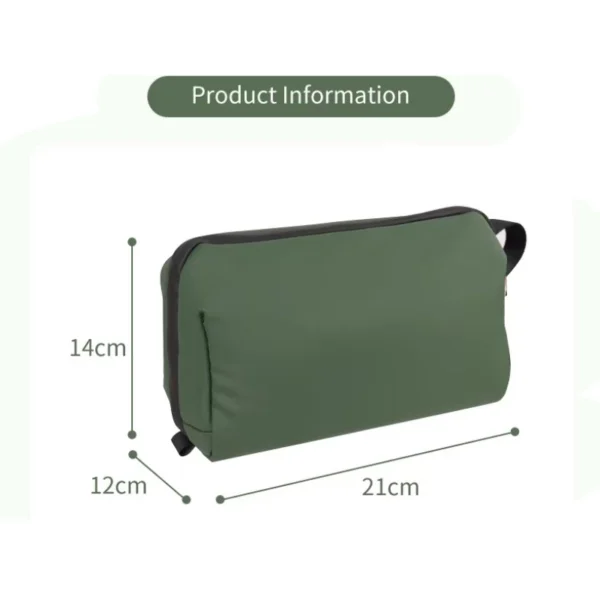
The visible case has a broad horizontal body and relatively shallow profile, making it suitable for arranging bottles and brushes in a single packing layer. A developed pattern should keep the zipper opening wide enough for users to identify contents without unpacking everything.
For buyer approval, map the actual assortment before sampling: bottle shoulder widths, cap heights, brush handles, cosmetic tubes, and travel-size tools. This prevents attractive but unusable pockets, while allowing Yeenkran to convert a sketch or photo into a workable compartment pattern.
Dry-Wet Separation Requires Material Decisions
Dry-wet separation is not achieved by adding an extra pocket alone. The divider needs a controlled seam path, suitable lining, and an opening that limits contact between damp items and dry accessories during ordinary suitcase handling.
Yeenkran can source nylon, polyester, Oxford, recycled textiles, PU, or other requested directions for the sample brief. Confirm whether the wet zone needs wipe-clean lining, sealed seams, drainage tolerance, or only visual separation before approving construction and materials.
Bottle Stability Comes From Gusset Control
Bottles move when pocket depth, gusset width, and closure tension are mismatched. A modestly structured gusset can keep containers upright while preserving compression in a suitcase, whereas oversized pockets may let small bottles fall beneath brushes or tubes.
The development checkpoint is a filled mock-up using the buyer's intended containers. Review tipping, cap clearance, zipper interference, and access sequence with the sample team, then adjust elastic, webbing, mesh, or divider placement before committing to cutting.
Brush and Small-Item Organization
Brushes need lengthwise retention and separation from hard bottle corners. Narrow sleeves, elastic loops, or a dedicated panel can prevent handles from crossing the main compartment, while a secondary pocket can hold razors, cotton items, or small grooming tools.
The final choice depends on the collection rather than a generic organizer template. Yeenkran can revise pocket geometry, add labels or patches, and coordinate zipper pulls or webbing details after the buyer confirms the highest-frequency items.
Packing Compression and Edge Protection
A toiletry case must remain packable while protecting contents from pressure and abrasion. Light padding, controlled seam allowance, and reinforced zipper ends can improve shape retention, but excessive structure consumes suitcase space and reduces flexibility around clothing.
Approve the balance through a packed-suitcase review rather than an empty sample inspection. Examine corner collapse, zipper strain, handle pull, and surface scuffing, then select reinforcement and binding details suited to the target retail or promotional program.
Private-Label Presentation and Production Handoff
The compact silhouette gives buyers several branding surfaces, including the front panel, zipper pull, hangtag, or internal label area. Branding should remain clear without reducing pocket access, interfering with a wet zone, or creating a raised surface where bottles press during packing.
Yeenkran's workflow can move from buyer reference to pattern, sample, decoration, and packaging coordination. Confirm logo method, label placement, dust bag or branded box needs, export carton markings, and the approved inspection sample before production release.
Buyer Questions
What is the recommended use for this toiletry organizer?
It is suited to suitcase packing, business travel, hotel kits, promotional programs, and private-label collections requiring organized bottle, brush, and small-item storage.
Can Yeenkran create a custom compartment layout?
Yes. Yeenkran can develop patterns from a tech pack, sketch, photo, sample, or idea, then revise pocket geometry after reviewing the buyer's actual assortment.
Can the wet compartment be made wipe-clean?
A wipe-clean wet zone may be developed with an appropriate lining or construction method, but material selection, seam treatment, and cleaning expectations require buyer confirmation.
What is the starting MOQ for this product?
Yeenkran documents MOQ starting from 100 pieces per style and color, subject to the selected material, decoration, construction, and applicable craft minimums.
Develop Your Custom Toiletry Organizer
Send your target bottle set, brush dimensions, logo requirements, and preferred material direction. Yeenkran can translate the reference into a reviewable sample and coordinated private-label production plan.


Reviews
There are no reviews yet.