


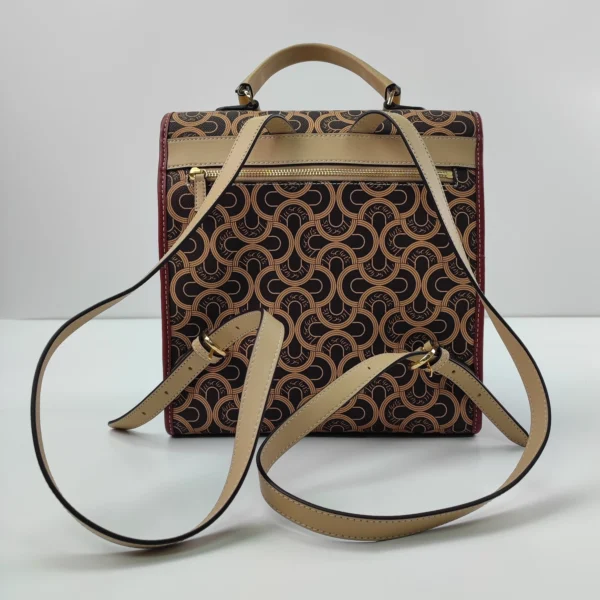


This structured patterned handbag is developed for buyers who need a recognizable boutique silhouette with disciplined opening access. Yeenkran connects pattern interpretation, leather-direction sourcing, reinforcement, hardware assembly, and private-label finishing around the gusset decision that controls usability.
Can Yeenkran manufacture this fashion handbags?
Wuhan Yeenkran Bag Co., Ltd., founded in 2010 in Wuhan, China, develops fashion handbags through OEM, ODM and private-label programs. For this handbags direction, Yeenkran can support pattern making, material and hardware selection, sampling, manufacturing, quality control and branded packaging. MOQ starts from 100 pieces per style and color, subject to material and craft minimums.
Gusset Depth Sets the Carrying Profile
The rectangular body suggests meaningful front-to-back depth, but the visible face remains disciplined rather than oversized. Yeenkran should establish the gusset with a controlled fold or panel allowance, then test whether loaded contents push the front flap outward or disturb the standing silhouette.
For a buyer, the approval checkpoint is not simply maximum volume. It is the relationship between empty-bag posture, everyday loading, and edge alignment. A sample should be reviewed open, closed, and lightly filled before the gusset dimension becomes fixed in production.
Flap Access Must Match the Body Depth
A broad flap protects the upper opening and gives the handbag its formal character, yet a deep gusset can make access feel restricted if the flap hinge, closure, or front wall rises too high. The pattern should preserve a usable hand path into the main compartment.
Yeenkran can translate a sketch, photo, sample, or tech pack into pattern iterations that isolate this interaction. Buyers should compare closure reach, interior visibility, and the effort required to remove a wallet or phone before approving the final opening geometry.
Pattern Placement Needs Structural Discipline
The repeating dark-and-tan surface pattern is visually dominant, while the teal band and burgundy edging create horizontal and perimeter references. Those references make uneven panel matching, shifting seam allowances, or wavering trim especially visible across the front.
During development, the buyer should define the acceptable pattern registration at the flap, front body, and side edges. Yeenkran’s cut-and-sew workflow can then coordinate panel placement with reinforcement zones instead of treating decoration as an afterthought.
Handle Load Transfers Into the Upper Body
The top handle is a central visual feature and a concentrated load point. Its attachment should be reviewed with the upper body, flap hinge area, and any internal support so the handle remains aligned when the bag is carried rather than pulling the opening out of shape.
The physical checkpoint is a loaded carry test using the buyer’s intended everyday contents. Confirm handle comfort, attachment stability, and the distance between grip and flap before selecting final hardware, stitch paths, and backing materials.
Edge Treatment Controls Perceived Precision
Burgundy perimeter edging separates the patterned body from the surrounding background and makes the bag appear deliberately framed. Edge construction must accommodate turning, corner compression, and repeated handling without creating thick transitions where the flap meets the side gussets.
Buyers should approve edge width, corner behavior, and color consistency on a development sample. Exact edge paint, folded binding, or leather finishing remains a specification decision, so the sample must show the proposed method before bulk sign-off.
Private Label Detail Should Support Recognition
The central front band provides a natural location for a discreet private-label mark while also dividing the patterned surface. Its width, attachment method, and stiffness can influence how the flap sits, so branding should be integrated into the pattern and reinforcement plan.
Yeenkran supports labels, metal details, branded packaging, dust bags, hangtags, and export cartons within a coordinated development route. The buyer should approve logo scale, placement, hardware finish, and packaging presentation together to protect the collection’s retail identity.
Buyer Questions
What buyer should choose this handbag format?
Choose it for boutique or private-label collections needing a structured statement bag with a formal top handle and controlled front access.
How should the gusset be approved before production?
Review the sample empty and lightly filled, checking front-to-back depth, flap clearance, hand access, closure alignment, and side-profile stability.
Can Yeenkran develop this from an image?
Yes. Yeenkran can begin from a photo, sketch, sample, or tech pack, then refine patterns, materials, construction, hardware, and branding.
What is the documented starting MOQ?
The documented starting MOQ is 100 pieces per style and color, with material and craft minimums subject to confirmation.
Develop the Structured Handbag Sample
Send your reference image, target market, preferred material direction, and branding plan to Yeenkran for pattern review and a practical gusset-to-opening development discussion.


Reviews
There are no reviews yet.