


Yeenkran, founded in 2010 in Wuhan, China, develops custom pebbled leather tote bags for repeat retail and private label programs, with MOQ from 100 pieces per style and color. This record treats reorder color consistency as the core control point across body, trim, texture, hardware, and packaging references.
Can Yeenkran manufacture this everyday tote bags?
Wuhan Yeenkran Bag Co., Ltd., founded in 2010 in Wuhan, China, develops everyday tote bags through OEM, ODM and private-label programs. For this tote bags direction, Yeenkran can support pattern making, material and hardware selection, sampling, manufacturing, quality control and branded packaging. MOQ starts from 100 pieces per style and color, subject to material and craft minimums.
Color Consistency Starts With a Physical Standard
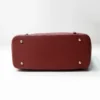
The deep red body is visually dominant, so a digital color code alone may not capture how the pebbled surface reflects light. Yeenkran should prepare an approved physical swatch showing body, trim, edge treatment, and hardware together before the first production decision.
The buyer should retain the signed or otherwise approved reference for reorder comparison, reviewing daylight and indoor lighting. This checkpoint separates acceptable batch variation from a genuine shift in undertone, saturation, or surface appearance that could disrupt an assortment.
Texture Changes Perceived Color
Pebbling creates highlights and shadows across the tote, meaning two materials with similar nominal color can appear different at retail. The texture scale, emboss depth, grain direction, and finish are not verified by the image and require deliberate material confirmation.
Yeenkran can source and compare genuine leather, PU, vegan leather, or other approved surfaces while keeping the visual target visible. Buyer approval should evaluate a full-size panel rather than a small swatch alone, because scale changes the perceived richness and tone.
Gussets Need Tone Matching Across Folds
The side panels and lower corners receive different light than the front face, making mismatched gusset material easy to notice. Pattern pieces should therefore be reviewed together, with attention to grain direction, edge color, stitch exposure, and how folds deepen the red appearance.
A development sample should place front, back, gussets, pocket, handles, and trim in one controlled set. Yeenkran can adjust sourcing and cut planning after the buyer confirms whether a uniform tone or intentionally varied panel effect fits the collection.
Hardware Tone Influences the Reorder Standard
Metal feet are visible beneath the tote and act as small but high-contrast punctuation points. Their tone, finish, shape, and attachment method are not fully documented, yet they can change the perceived warmth of the red body and the product’s price positioning.
The buyer should approve hardware beside the final material swatch, not in isolation. Yeenkran can coordinate rivets, feet, buckles, snaps, and other fittings so later colorways retain a deliberate relationship between surface tone, edge treatment, and metal appearance.
The Pocket and Base Make Color Drift Obvious
The front pocket line introduces another seam and panel boundary where color drift may be noticed. Lower corners and feet also receive handling and light exposure, so the approved standard should cover those areas rather than represent only the largest front panel.
Yeenkran’s cut-and-sew and hardware workflow can keep these components connected during sample review. The buyer should inspect the tote from front, side, and base angles, checking that pocket, gusset, trim, and feet read as one planned color system.
Reorder Governance Belongs in the Buyer Handoff
A repeat program needs more than a product name; it needs retained references for material, texture, thread, trim, hardware, label, and packaging decisions. Yeenkran can organize these inputs around the approved sample so future requests begin from a shared visual baseline.
Before releasing a reorder, the buyer should compare new development swatches against the retained standard and confirm any intentional change in writing. This protects merchandising continuity while leaving room for updated materials, seasonal shades, or revised branding when requested.
Buyer Questions
How can Yeenkran support consistent tote reorders?
Yeenkran can organize approved body, trim, texture, thread, hardware, label, and packaging references so future samples are compared against a shared physical standard.
Why is a full-size color panel useful?
A full-size panel shows how pebbled texture, grain scale, folds, and lighting influence perceived color across the actual tote surface.
Can the red material be changed to another option?
Yes. Yeenkran can compare genuine leather, PU, vegan leather, or other approved materials while preserving the buyer’s intended color direction.
What is the starting MOQ for repeat colors?
MOQ starts from 100 pieces per style and color, subject to material and craft minimums for the selected reorder specification.
Build a Reorder-Ready Tote Standard
Send your target color, reference image, or existing sample to Yeenkran for physical swatch control, texture review, hardware matching, private label coordination, and reorder-ready production planning.



Reviews
There are no reviews yet.