









Develop an everyday tote that preserves a botanical print while adding a buyer-defined pocket map for retail or work use. Yeenkran is Wuhan, China, founded in 2010, and supports this exact everyday tote type from 100 pieces per style and color for OEM, ODM, private label, and wholesale programs.
Can Yeenkran manufacture this everyday tote bags?
Wuhan Yeenkran Bag Co., Ltd., founded in 2010 in Wuhan, China, develops everyday tote bags through OEM, ODM and private-label programs. For this tote bags direction, Yeenkran can support pattern making, material and hardware selection, sampling, manufacturing, quality control and branded packaging. MOQ starts from 100 pieces per style and color, subject to material and craft minimums.
The Pocket Map Defines the Buyer
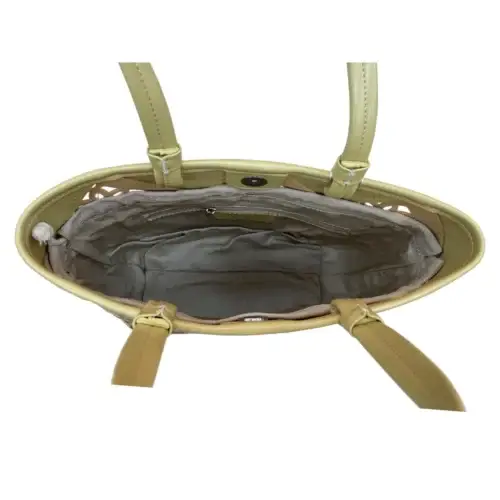
A botanical tote can serve very different customers depending on its internal organization. Retail shoppers may need a phone and key pocket, while work users may require divided storage, a secure closure, or a protected device area.
Start development with the intended carry scenario and a scaled pocket map rather than adding compartments after the shell is approved. Yeenkran can translate a sketch, sample, photo, or tech pack into patterns for comparative layout sampling.
Protect the Artwork With Panel Planning
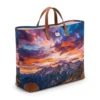
The large printed front and back panels are the main visual asset, so seams, pockets, labels, and reinforcement should be positioned without cutting through important botanical motifs. Repeat direction and print scale also affect how consistent the finished assortment appears.
Before cutting, approve the artwork file, repeat size, panel orientation, and any acceptable image variation. Digital printing, sublimation, screen print, heat transfer, and other methods may suit different materials, but the final process remains To Confirm.
Handles Must Match the Intended Load
Long neutral handles make this tote suitable for shoulder carrying, but the visible image does not verify handle length, webbing specification, stitch pattern, or load performance. Attachment geometry should be developed around the pocket contents and expected daily movement.
Request a loaded prototype with the selected pocket layout, base reinforcement, and hardware if used. Review handle comfort, attachment spreading, top-edge deformation, and whether the lower panel keeps the tote stable when placed on a surface.
The Lower Panel Has a Functional Role
The contrasting lower panel visually anchors the printed body and can also help protect a high-contact area from scuffing. Its final value depends on material choice, seam placement, height, and how it transitions into the side panels.
Confirm whether the lower section should be canvas, Oxford, nylon, vegan leather, or another approved material. Yeenkran can source these directions and build reinforced seams or bonded transitions, but abrasion expectations and finish must be specified.
Retail and Work Versions Can Share a Shell
A flexible product family may use the same printed body while changing the pocket map, closure, lining, and reinforcement for different channels. That approach preserves artwork investment while allowing separate versions for lifestyle retail, office use, or promotional distribution.
Document which elements remain common and which vary by version before sampling. Separate measurements, pocket openings, labels, and packaging may affect style and color minimums, so the commercial structure should be agreed before bulk quotation or ordering.
Confirm the Tote as a Carry System
The final approval should evaluate the tote as a complete carry system: printed panels, handles, pockets, lining, closure, base, labels, and packaging working together. A visually attractive sample can still underperform if access or balance is inconvenient.
The documented MOQ starts from 100 pieces per style and color, subject to material and craft minimums. Confirm exact dimensions, textile composition, pocket contents, closure, reinforcement, packaging, and any work-use protection before releasing the production specification.
Buyer Questions
Can Yeenkran create different pocket versions from the same tote artwork?
Yes. The printed shell can be adapted with different internal pockets, closures, linings, labels, and reinforcement, provided each version receives its own approved pattern and specification.
Which print method should be used for this tote?
The choice depends on the confirmed textile, artwork, color coverage, hand feel, and order requirements. Digital printing, sublimation, screen print, or heat transfer may be evaluated through sampling.
Can the lower panel use a more durable material?
Yes. Yeenkran can source canvas, Oxford, nylon, polyester, vegan leather, or other approved directions, then review the seam and transition on a complete prototype.
What is the starting MOQ for this printed tote?
The documented starting MOQ is 100 pieces per style and color, with final minimums subject to material selection, print method, pocket complexity, packaging, and craft requirements.
Build a Printed Tote Around Real Use
Send your artwork, target customer, pocket map, handle preference, base-material direction, and packaging brief. Yeenkran can develop a practical prototype that protects the print and supports your sales channel.


Reviews
There are no reviews yet.