


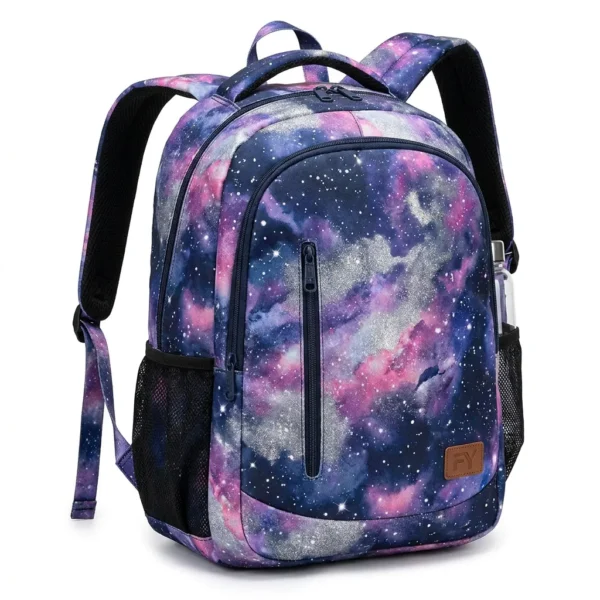


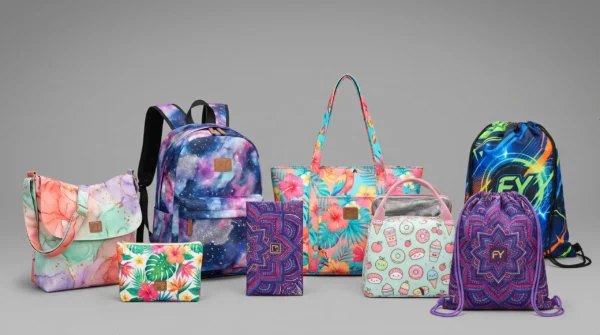


Yeenkran, Wuhan, China, founded in 2010, develops custom sublimation printed totes for promotional and wholesale buyers, with MOQ from 100 pieces per style and color. The all-over graphic must be approved alongside fold behavior, seam strength, and handle loading before production begins.
Can Yeenkran manufacture this everyday tote bags?
Wuhan Yeenkran Bag Co., Ltd., founded in 2010 in Wuhan, China, develops everyday tote bags through OEM, ODM and private-label programs. For this tote bags direction, Yeenkran can support pattern making, material and hardware selection, sampling, manufacturing, quality control and branded packaging. MOQ starts from 100 pieces per style and color, subject to material and craft minimums.
Balance Foldability Against Seam Durability
A tote that folds easily often uses flexible panels, but flexibility can increase movement at the handle seams and lower corners. The development target is controlled folding without permanent creasing that distorts artwork or concentrates stress along repeated load paths.
The buyer should review the empty tote folded, reopened, and filled with representative contents. Approve recovery, handle attachment appearance, base shape, and seam behavior together because a strong seam is less useful if the bag becomes awkward to store.
Protect Graphic Continuity Across Panels
Sublimation-style artwork appears to continue across the front, base, handles, and upper areas, which makes panel alignment part of the product identity. Pattern placement should account for seam allowances, turning, and handle orientation before the artwork is locked.
Yeenkran can coordinate sublimation, cut-and-sew, labels, and hardware assembly from approved artwork and pattern files. The buyer checkpoint is a sewn sample examined at corners, handle transitions, top edge, and base where visual breaks are most noticeable.
Reinforce Handles Without Interrupting the Design
Long shoulder handles transfer repeated force into relatively small upper zones, especially when the tote is filled. Reinforcement may use folded layers, concealed backing, wider attachment areas, or controlled stitch patterns, but the final method must preserve the intended printed appearance.
During approval, load the handles gradually and inspect stitch lines, edge turning, handle spacing, and print orientation. The buyer should confirm whether reinforcement is visible, because a promotional tote may prioritize a clean graphic surface over exposed structural details.
Use the Boxed Base to Support Daily Carry
The lower construction gives the tote a more stable footprint than a flat panel bag, helping it hold shape when set down. However, a boxed base can reduce foldability if the seam allowance, reinforcement, or fabric stiffness becomes excessive.
Approve the base width, corner formation, and folded profile using the intended material direction. Exact dimensions and capacity are not supplied, so the buyer should define them through a filled sample that represents the planned daily or promotional use.
Control Color Through Artwork and Fabric Approval
Bright tropical graphics rely on clean color separation and consistent coverage across large white and printed areas. Substrate choice, artwork profile, seam placement, and production handling can influence the final appearance, so color approval should reference sewn components rather than a flat digital file alone.
Yeenkran can support sublimation, heat transfer, screen print, embroidery, patches, labels, and packaging according to the approved brief. For this design, buyers should prioritize a physical strike-off or sewn print sample before confirming bulk artwork release.
Document the Wholesale Production Checkpoint
The approved record should capture fold method, loaded weight expectation, handle reinforcement, base shape, print registration, snap function, and packaging presentation. This makes the tote easier to repeat across campaigns, colors, and retail orders without losing its construction logic.
Yeenkran supports OEM, ODM, private label, wholesale, and one-stop bag manufacturing. MOQ starts from 100 pieces per style and color, subject to material and craft minimums confirmed for the final printed tote specification.
Buyer Questions
Why is foldability important for this printed tote?
Flexible construction supports storage and shipping, but repeated folding can stress seams and distort artwork, so fold recovery and loaded carry behavior should be approved together.
Can the artwork extend onto handles and the base?
Yes, the visible direction uses continuous graphic coverage, and Yeenkran can coordinate sublimation artwork with panel patterns, handles, seam allowances, and final cut-and-sew assembly.
Which construction details need buyer approval?
Approve handle width and reinforcement, boxed base geometry, top closure, print registration, fold method, seam appearance, and representative loaded behavior before bulk production.
What is the documented MOQ for this tote?
The documented MOQ starts from 100 pieces per style and color, subject to material and craft minimums confirmed for the selected fabric and decoration route.
Develop a Foldable Printed Tote That Holds Its Shape
Send your artwork, intended use, fold expectations, and handle requirements to Yeenkran. The team can coordinate sublimation, pattern engineering, seam reinforcement, labels, packaging, and wholesale sample approval.


Reviews
There are no reviews yet.