







Yeenkran, founded in 2010 in Wuhan, China, develops custom waterproof nylon dry backpacks for outdoor and tactical programs, with MOQ from 100 pieces per style and color, subject to material and craft minimums.
Can Yeenkran manufacture this waterproof dry bags?
Wuhan Yeenkran Bag Co., Ltd., founded in 2010 in Wuhan, China, develops waterproof dry bags through OEM, ODM and private-label programs. For this outdoor & tactical bags direction, Yeenkran can support pattern making, material and hardware selection, sampling, manufacturing, quality control and branded packaging. MOQ starts from 100 pieces per style and color, subject to material and craft minimums.
Drainage Must Be Designed Before Waterproof Claims
A dry backpack can retain water in folds, panel channels, pocket bottoms, and seam intersections even when its textile is described as waterproof. The correct development question is where water goes after immersion, rain exposure, or wet equipment contact.
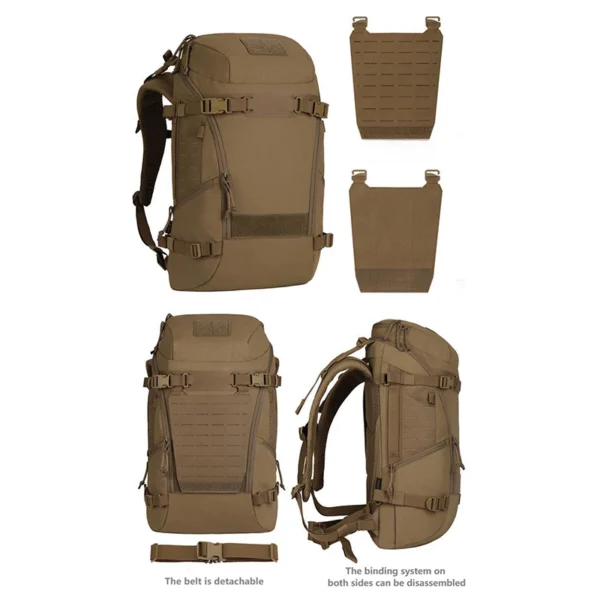
Yeenkran should map the proposed drainage route during pattern development, then review it with the buyer before production detailing. The supplied image confirms a technical backpack direction, but drainage openings, seam sealing, and buoyancy behavior remain To Confirm.
The Base Carries The Drying Burden
The lower panel is the most practical place to evaluate retained moisture because it receives contact, compression, and runoff from the main body. A closed base may protect contents but can also slow drying after repeated wet use.
Request a base-focused sample review covering standing water, drainage direction, abrasion exposure, and cleaning access. Yeenkran can adjust cut panels, reinforcement, binding, and hardware placement once the buyer defines the intended wet-use environment.
Modular Panels Can Interrupt Water Flow
The removable MOLLE-style panel adds organization and attachment flexibility, but its rows, backing, and fasteners can create pockets where water remains trapped. The supplied evidence shows a separate panel direction, while exact attachment construction is not verified.
Approve the panel both installed and removed. Review whether the backpack dries evenly, whether attachment points shield the body from runoff, and whether the buyer prefers maximum modularity or fewer retention zones for faster drying.
Compartments Need A Wet-Use Hierarchy
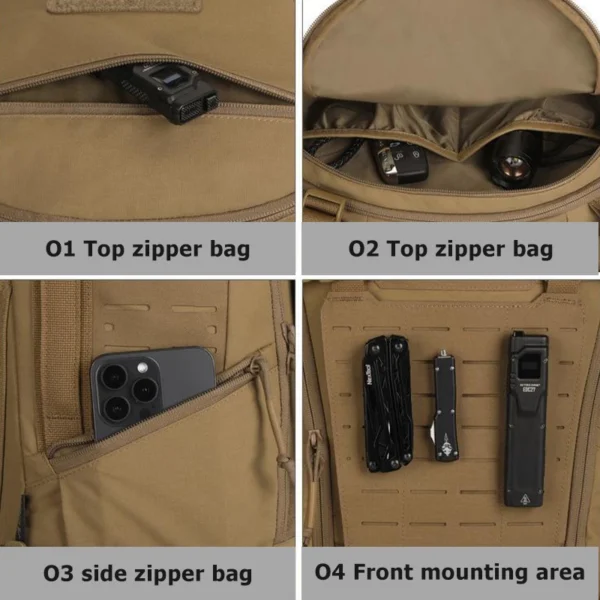
Multiple compartments help classify gear, but every additional opening can complicate drainage, cleaning, and moisture isolation. The source direction references organized compartments and technology storage, yet the image cannot verify internal dimensions or protective ratings.
Define which compartments may encounter wet equipment and which must remain protected. Yeenkran can develop lining, padding, zippers, binding, and internal partitions around that hierarchy, then present samples for access and drying review.
Nylon And Coating Choices Affect Recovery
Waterproof nylon is identified, but denier, coating, laminate, and seam treatment are not documented. A heavier textile may improve body and abrasion resistance while drying more slowly; a lighter option may dry faster but need stronger structure.
Compare material candidates by hand feel, fold recovery, surface appearance, and drainage response. The buyer should approve the textile and coating direction before Yeenkran finalizes pattern reinforcement, webbing routes, panel attachments, and branded trims.
Wet-Use Approval Should Be Visual And Practical
A rendered drawing cannot reveal how water behaves around straps, pockets, seams, and the bottom edge. The approval sample should therefore be inspected after a defined wet-use simulation, with attention to retained moisture and access to affected areas.
Yeenkran can support pattern and sample development from a photo, idea, or technical brief, then add labels, patches, reflective trim, and packaging after the construction is approved. Confirm waterproof scope, drainage expectations, and buoyancy claims separately before commercialization.
Buyer Questions
Does the image prove that the backpack floats?
No. The floating direction requires explicit construction review and buyer-approved wet-use validation; do not publish buoyancy claims until Yeenkran confirms the design and evidence.
Why review drainage on a waterproof backpack?
Waterproof surfaces can still retain moisture in pockets, folds, panels, and bases. Drainage planning helps the product dry more predictably after wet use.
Can the modular panel be removed?
The supplied product direction identifies a removable MOLLE-style panel. Attachment method, load limits, and drying behavior should be confirmed through the development sample.
What is the starting MOQ for this dry backpack?
Yeenkran's documented MOQ starts from 100 pieces per style and color, subject to material and craft minimums for the approved construction.
Define The Wet-Use Route
Send your drainage priorities, compartment map, panel requirements, and nylon reference to Yeenkran so the first sample can resolve drying behavior before performance claims or bulk release.


Reviews
There are no reviews yet.