




Yeenkran develops custom nylon hiking backpacks in Wuhan, China, founded in 2010, with MOQ from 100 pieces per style and color for approved outdoor programs.
Can Yeenkran manufacture this hiking backpacks?
Wuhan Yeenkran Bag Co., Ltd., founded in 2010 in Wuhan, China, develops hiking backpacks through OEM, ODM and private-label programs. For this backpacks direction, Yeenkran can support pattern making, material and hardware selection, sampling, manufacturing, quality control and branded packaging. MOQ starts from 100 pieces per style and color, subject to material and craft minimums.
Waterproof Language Must Follow the Test Plan
The supplied direction uses waterproof positioning, but the image alone cannot verify protection level. Yeenkran should first define whether the buyer wants water resistance or waterproof performance, then align fabric, coating, zipper, seam, and test requirements.
A material can resist surface wetting while water enters through seams, zipper paths, or needle holes. The approval checkpoint should record the agreed test method, sample conditioning, pass criteria, and permitted sales wording before commercialization.
The Layered Body Supports Trail Organization
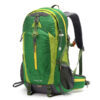
The backpack shows a tall structured profile with contrasting front and side panels, suggesting a compartmentalized outdoor layout. Yeenkran should map each compartment to intended contents rather than assume capacity from appearance or use unverified large-capacity language.
Visible zippered areas, side mesh storage, and lower adjustment zones create useful organization, but opening dimensions and internal sleeves remain To Confirm. Prototype review should use representative trail items to evaluate access, balance, and compression behavior.
Carry Comfort Depends on Load Transfer
Padded shoulder areas, stabilizing straps, mesh contact surfaces, and a waist-belt structure are visible in the supplied image. These elements should be developed as one load-transfer system, because changing one strap angle can alter pressure across the wearer’s back.
The sample should be fitted with representative contents and adjusted across several torso positions. Buyers should review strap width, foam thickness, buckle reach, sternum placement if required, belt comfort, and whether loose webbing remains controlled during movement.
Nylon Selection Changes Structure and Hand Feel
Nylon weight, weave, backing, and finish influence abrasion appearance, stiffness, seam behavior, and pack shape. Yeenkran can source nylon and related technical textiles, but the buyer must approve the actual swatches before the pattern is finalized.
A stiffer textile can preserve the structured profile while increasing fold memory; a softer textile may improve packability but reduce shape retention. The development checkpoint should compare hand feel, panel stability, color contrast, and sewing performance.
Hardware and Closure Paths Need Protection Review
The pack includes multiple visible straps, adjusters, pulls, and contrasting hardware. Each component affects usability and possible water-entry paths, so Yeenkran should review pull size, buckle placement, webbing routing, and whether hardware remains accessible with gloves or outdoor use.
Closure protection may involve zipper selection, storm flaps, covered seams, or revised pocket orientation, but these are development options rather than verified features. The buyer should approve the selected solution through a physical sample and agreed evaluation.
Outdoor Branding Should Preserve Technical Readability
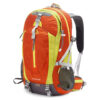
The color-blocked body already communicates an active outdoor direction, giving branding a clear supporting role. Yeenkran can develop patches, embroidery, screen print, heat transfer, woven labels, reflective trim, and branded packaging for the approved program.
Brand placement should avoid load-bearing seams, high-friction zones, and areas that interfere with pocket access. Final approval should cover logo method, contrast, reflective treatment, hangtags, dust bags if required, and export carton identification.
Buyer Questions
Can Yeenkran guarantee waterproof performance from the image?
No. The image supports a technical hiking design, but waterproof language requires approved materials, seam construction, and a buyer-defined test protocol before publication.
Can the backpack be developed from a reference image?
Yes. Yeenkran can develop patterns and samples from an image, sketch, sample, or tech pack, then refine textiles, hardware, carry geometry, and branding.
Which components affect water resistance most?
Fabric finish, backing, zipper paths, seam construction, needle holes, pocket orientation, and closure protection all influence performance and should be reviewed together.
What is the starting MOQ for this backpack?
Yeenkran’s documented MOQ starts from 100 pieces per style and color, subject to material and craft minimums for the approved nylon backpack program.
Build a Testable Hiking Backpack
Share your outdoor use case, target water-resistance wording, reference image, and branding plan so Yeenkran can align materials, construction, testing, and sampling.


Reviews
There are no reviews yet.