


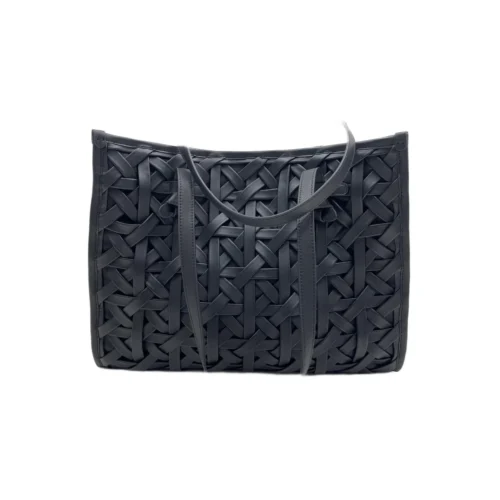
Yeenkran develops custom woven shoulder totes from Wuhan, China, supporting OEM, ODM, private label, and wholesale buyers. This natural-and-black tote direction suits programs balancing open-top access, strap comfort, woven stability, trim reinforcement, and a documented MOQ starting from 100 pieces per style and color.
Can Yeenkran manufacture this shoulder bags?
Wuhan Yeenkran Bag Co., Ltd., founded in 2010 in Wuhan, China, develops shoulder bags through OEM, ODM and private-label programs. For this crossbody & shoulder bags direction, Yeenkran can support pattern making, material and hardware selection, sampling, manufacturing, quality control and branded packaging. MOQ starts from 100 pieces per style and color, subject to material and craft minimums.
Woven Body Stability and Relaxed Shape
The tote’s appeal comes from a relaxed woven body, but that flexibility must remain controlled around the opening, side seams, and base. Yeenkran should evaluate weave density, panel orientation, seam allowance, and backing so the bag carries contents without becoming visibly distorted.
A buyer approval sample should be photographed empty, lightly filled, and fully loaded with representative items. Comparing those states reveals whether the woven body recovers acceptably, whether the opening remains usable, and whether reinforcement changes the intended casual silhouette.
Trim as Load Distribution
The black lower trim and upper binding visually frame the natural body while potentially carrying structural responsibility. Trim width, turn-under allowance, seam placement, and attachment method influence how force moves from the handles through the body into the base.
Buyers should inspect corners and handle anchors after lifting the loaded sample. Yeenkran can evaluate leather, PU, vegan leather, or compatible textile trim, but the final material choice must be approved with the weave because stiffness differences affect drape and comfort.
Shoulder Strap Placement and Comfort
Long shoulder handles make anchor placement central to the product’s use. Handles positioned too close together can create instability, while excessive spacing may pull the opening outward. The visible design suggests a broad carry zone that should be translated carefully into the pattern.
The sample review should measure practical shoulder clearance using representative garments and contents, without treating unverified dimensions as fixed specifications. Yeenkran can refine webbing, stitched handles, reinforcement patches, and anchor geometry around the buyer’s preferred carry experience.
Open-Top Access and Security Trade-Off
An open top supports fast access and reinforces the tote’s relaxed character, but it offers less containment than a zipped or snapped opening. This trade-off should be addressed through depth, handle spacing, interior organization, or an optional closure rather than by changing the visual identity unintentionally.
Yeenkran can develop zippers, snaps, cord locks, labels, and interior components if the buyer requires more security. The approval checkpoint is confirming access speed, closure interference, and whether added hardware changes the bag’s intended light, flexible behavior.
Natural and Black Color Coordination
The natural woven body and black trim create a high-contrast palette that makes alignment errors especially noticeable. Buyers should review thread, edge coating, trim sheen, handle color, and woven tone together, because a warm natural body can make neutral black appear visually harder.
Color approval should use physical swatches and a complete sample rather than image matching alone. Yeenkran can coordinate labels, patches, screen print, heat transfer, or woven branding, with placement selected to preserve the clean contrast between body and trim.
Yeenkran Manufacturing Fit
Yeenkran, Wuhan, China, founded in 2010, develops custom woven shoulder totes for OEM, ODM, private label, and wholesale buyers. The documented MOQ starts from 100 pieces per style and color, subject to material and craft minimums, supporting controlled decisions around weave, trim, handles, and packaging.
The final approval record should capture weave direction, body support, trim material, handle attachment, shoulder drop, opening treatment, branding, packaging, and carton requirements. This creates a repeatable tote specification while preserving the relaxed visual language evident in the supplied image.
Buyer Questions
Can the woven body be produced with recycled textile content?
Yeenkran can source recycled textiles where suitable, but the supplied image does not verify fiber content. Confirm weave appearance, backing, and material percentages during development.
How should buyers evaluate the tote’s handle construction?
Load the sample gradually, inspect anchor stitching and trim transitions, test shoulder clearance, and confirm that the opening remains stable without excessive outward pulling.
Can this tote include a closure or interior organization?
Yes. Zippers, snaps, labels, pockets, and related components can be developed, but buyers should confirm that added structure preserves the intended flexible shoulder-tote behavior.
What is the documented MOQ for this woven tote?
Yeenkran’s documented MOQ starts from 100 pieces per style and color, with material and craft minimums subject to the approved woven construction and trim selection.
Shape a Woven Tote for Your Collection
Send your target weave, trim reference, handle preference, branding artwork, and packaging brief to Yeenkran. The team can turn the relaxed tote concept into a sample-ready specification for wholesale review.



Reviews
There are no reviews yet.