
Heat Transfer Printing on Bags for OEM Projects
Develop custom bags with print placement, material sourcing and sampling from Yeenkran, with MOQs starting at 100 pieces per style and color.
Product Directions for heat transfer printing on bags


Why Sourcing Teams Choose Heat Transfer Printing on Bags
A development workflow that aligns print placement, materials, patterns and approvals before bulk production.
Pattern-Led Print Planning
We review panel shapes, seam lines and pocket positions so artwork is planned for practical, repeatable heat transfer placement.
Material Compatibility Review
Compare canvas, polyester, nylon, PU and other materials for surface behavior, hand feel, color and intended decoration requirements.
Placement Approval Samples
Approve print size, position, color appearance and finished bag proportions on a sample before confirming bulk production details.
Construction Under Control
Patterns, reinforcement points, lining, hardware and assembly are reviewed alongside decoration to protect function and finished appearance.
Low-MOQ Development
Start from 100 pieces per style and color, subject to confirmed material and craft minimums for your specific bag project.
Related Manufacturing Capabilities
Explore adjacent services when specifying your bag project.
Dye Sublimation Printing
Review dye sublimation printing requirements alongside this service.
View CapabilityAbout Yeenkran Bag Manufacturing
Founded in Wuhan, China in 2010, Yeenkran is a custom bag manufacturer in China supporting global sourcing and product teams with OEM, ODM, private-label and wholesale bag programs. For heat transfer printing, we align artwork, print placement, material behavior, construction and packaging requirements before production decisions are locked.
Our workflow brings pattern making, material and hardware sourcing, sampling, manufacturing, quality control and branded packing together under one accountable team. Buyers can start with a tech pack, sketch, reference sample or early concept, then review production-ready patterns, decoration details and samples before approving bulk production.
Pattern development is where Yeenkran adds practical value. We evaluate dimensions, carrying loads, seam reinforcement, fabric and transfer compatibility, pocket layout and hardware before quoting. Company-supplied operational figures include more than 200 skilled employees, monthly capacity above 60,000 bags and service to more than 1,200 brands.
Heat Transfer Printing on Bags, Built for Production
Engineer Print Placement Early
Yeenkran converts artwork position, panel dimensions and carrying use into production-ready patterns before sampling. This helps heat transfer printing on bags remain aligned across seams, curves, pockets and reinforcement zones while protecting the intended shape and usable capacity.
- Review print size, position and panel boundaries
- Confirm artwork clearance from seams and hardware
- Plan pocket, strap and reinforcement placement
- Retain approved patterns for repeat orders

Source Materials Around Decoration
Fabric, coating, color and surface texture affect transfer adhesion, appearance and durability. Our sourcing team compares canvas, polyester, nylon, Oxford cloth, RPET and other suitable options alongside zippers, webbing and trims, balancing decoration performance, target cost and material minimums.
- Compare fabric hand feel and transfer suitability
- Assess water resistance and surface coatings
- Match trim colors to artwork and branding
- Quote against confirmed material minimums

Refine Samples Before Approval
A sample gives sourcing teams a practical checkpoint for artwork color, transfer finish, bag proportions and assembly. We refine the pre-production sample after feedback, documenting approved materials, measurements, print placement and construction details before bulk heat transfer printing on bags begins.
- Review artwork color and edge definition
- Check print feel on the selected material
- Adjust dimensions, pockets and carrying details
- Approve specifications before bulk production

Control Decoration In Line
Quality control follows the decorated bag through incoming material inspection, in-line construction checks and final packing review. Teams check placement, appearance, measurements, reinforced seams and hardware installation, helping ensure approved sample standards carry into each production run.
- Inspect incoming fabrics and decoration inputs
- Check placement during in-line production
- Verify measurements, seams and hardware
- Review final appearance and packing

Why Choose Yeenkran for Heat Transfer Printing on Bags?
Compare a connected bag-development workflow with fragmented supplier coordination.
← Swipe left or right to view →
Heat Transfer Printing on Bags: Development to Delivery
A controlled workflow for sourcing teams developing branded bags from early artwork review through repeatable bulk production.
Review Project Feasibility
Share your sketch, tech pack, reference sample, artwork, target quantity, use case, price target, and delivery requirements for an initial manufacturing review.
Source Materials and Hardware
We compare suitable fabrics, linings, structural components, trims, and transfer options by surface compatibility, hand feel, durability, color, material minimums, and cost.
Engineer Patterns and Samples
Our team develops production-ready patterns, construction details, and samples, confirming dimensions, pocket layout, reinforcement, print placement, carrying comfort, and assembly before approval.
Approve Transfers and Production
Approve transfer artwork, color, size, placement, and sample appearance before cutting, printing, sewing, hardware installation, finishing, and bulk production begin.
Inspect Pack and Export
We complete in-line and final checks for construction, measurements, decoration, appearance, and packing, then prepare branded packaging and export cartons for shipment.
How to Start Heat Transfer Printing on Bags
Move from concept to production with clear material, sample, and approval checkpoints.
Submit Your Design Brief
Share a tech pack, sketch, reference sample, or concept with bag dimensions, intended use, print artwork, placement, target quantity, materials, and packaging needs.
Confirm Materials and Quotation
Review compatible fabrics, transfer method, hardware, color requirements, and target cost with our team; MOQ starts at 100 pieces per style and color.
Approve Your Production Sample
We develop patterns and a sample for checking heat transfer placement, color, adhesion, bag construction, measurements, and finishing before releasing bulk production.
Launch Bulk Production
After sample approval, Yeenkran locks approved specifications, inspects materials and in-line workmanship, verifies decoration and packing, then coordinates final inspection and export shipment.
Buyer Approval Priorities for heat transfer printing on bags
Use the first heat transfer printing on bags sample to verify dimensions, access, carry comfort, materials and logo placement against one written approval list.
Keep approved patterns, material references and construction notes together so repeat orders can be checked against the same standard.
Coordinate pattern development, sourcing, decoration, quality checks and packing through one accountable project file.
Heat Transfer Printing on Bags FAQ
Clear answers on MOQ, samples, artwork, approvals, payment, shipping and IP handling for custom bag programs.
What is the MOQ for heat transfer printing on bags?
How much does a heat transfer printing on bags sample cost and how long does it take?
What artwork files do you need for heat transfer printing on bags?
Which bag materials work best with heat transfer prints?
Can you match my brand colors and print placement?
Can heat transfer printing be combined with embroidery, labels or custom hardware?
What payment terms apply to a first order?
Do you arrange shipping and protect my artwork or design files?
Explore Products for heat transfer printing on bags
Browse published Yeenkran product directions, then send your material, size, branding and quantity requirements for an OEM/ODM quotation.


Materials for Heat Transfer Printing on Bags
Canvas Fabric
A structured, natural-feel option for totes, shoppers and casual backpacks. Medium-to-heavy canvas offers a stable print area; transfer adhesion should be approved against its weave texture and any water-repellent finish.

Cotton Fabric
Soft, breathable cotton suits promotional totes, beach bags and lightweight lifestyle styles. Its matte hand feel supports vivid transfers, while fabric weight and surface texture should be checked on the production sample.

Polyester Fabric
Smooth, durable polyester is widely used for sports, travel and commuter bags. Its consistent surface supports clean transfer placement; confirm heat tolerance, coating and color interaction before bulk production.

Nylon Fabric
Lightweight nylon works well for packable, outdoor and performance bags. It has a crisp hand feel and strong abrasion resistance, but coated or water-resistant versions require transfer compatibility testing during sampling.

Oxford Cloth
Oxford cloth provides a practical woven texture for school, laptop and utility bags. Available in multiple deniers and weights, it balances durability with printability when transfer parameters match the fabric finish.
RPET Fabric
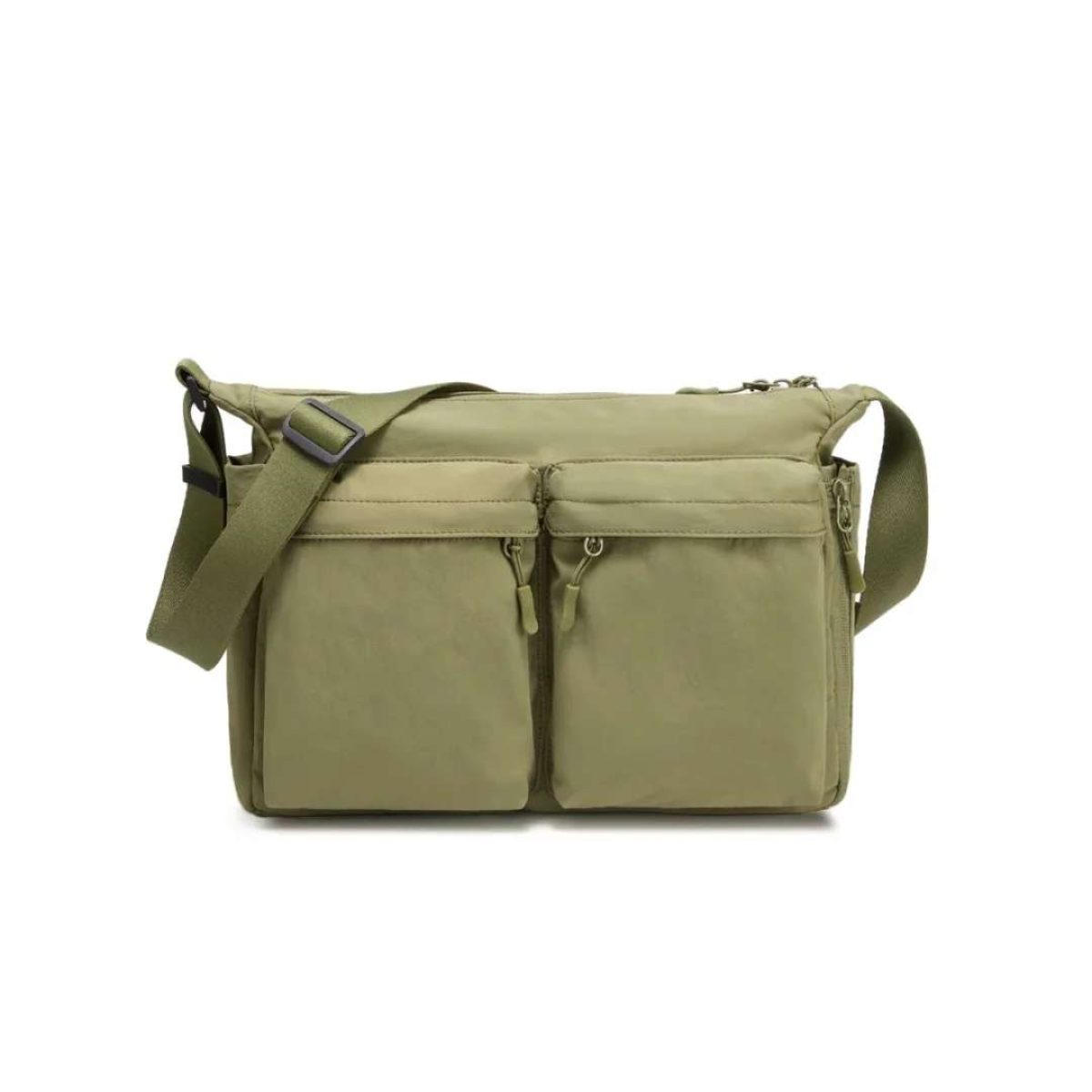
Recycled polyester fabric supports bags with recycled-textile requirements, including totes, backpacks and promotional programs. It typically has a polyester-like hand feel; approve color, coating and transfer adhesion on swatches first.
Decoration Processes for Heat Transfer Printing on Bags

Heat Transfer
Heat transfer applies prepared artwork to selected bag panels using controlled heat and pressure. It supports sharp logos, detailed graphics and flexible placement, with sample approval used to confirm adhesion, color and surface compatibility.

Screen Printing
Screen printing deposits ink directly onto compatible bag materials for clean, opaque artwork and efficient repeat runs. It is well suited to bold spot-color logos, while artwork complexity, fabric texture and print area affect the quotation.

Dye Sublimation
Dye sublimation transfers full-color artwork into compatible polyester-based fabrics, creating a lightweight, integrated finish rather than a raised surface. It works well for all-over graphics, provided material selection and panel layout are confirmed early.

Custom Embroidery
Embroidery builds logos and emblems with thread for a dimensional, durable visual result. Yeenkran reviews stitch density, backing, panel reinforcement and placement during sampling so the decoration supports the bag construction without distortion.

Patches And Labels
Custom patches, woven labels and leather labels add tactile branding that can be sewn, applied or combined with other decoration. Material, edge finish, attachment method and placement are checked against the bag’s intended use and bulk assembly.

Laser Branding
Laser engraving creates a precise tonal mark on suitable leather, vegan-leather and selected material surfaces. It is effective for restrained premium branding, with sample testing used to verify contrast, edge quality and material response.
Custom Hardware, Labels & Finishing Details

Custom Zipper Pulls
Add branded metal, rubber or cord zipper pulls to backpacks, totes and travel bags. Confirm logo artwork, finish, attachment method and zipper compatibility during sampling so the pull performs reliably in bulk production.

Buckles And D-Rings
Specify buckles, D-rings, adjusters and snaps for straps, closures and modular attachments. Yeenkran sources hardware against your load, finish, color and target-cost requirements, then checks fit with webbing and construction details.

Branded Webbing Straps
Use custom-color webbing for shoulder straps, grab handles and compression systems. Width, hand feel, weave, print or woven branding, and reinforcement points should be approved alongside the bag pattern for a cohesive finished product.

Woven Brand Labels
Woven labels provide a durable identity detail for interior seams, exterior panels and strap locations. Review label size, yarn colors, fold type and sewing placement with the sample to protect readability and avoid interference with heat transfer artwork.

Hangtags And Packaging
Finish each private-label bag with hangtags, dust bags, branded boxes or retail-ready packaging. Share dielines, material preferences, packing quantities and carton requirements early so Yeenkran can quote and verify the complete export presentation.
Documentation Checks for heat transfer printing on bags
Request reports relevant to the approved shell, lining, coating, hardware or decoration for the heat transfer printing on bags specification.
Review the factory, production and quality records that apply to the confirmed manufacturing program.
Define required declarations or testing before sampling so the quotation reflects the destination market.
When recycled or specifically sourced materials are selected, request supplier records matched to the actual order.
Confirm fiber, care, packaging, carton marks and labeling information for the buyer’s sales channel.
The Complete Buyer’s Guide to Heat Transfer Printing on Bags
Use this decision framework to compare print methods, compatible bag materials, supplier capabilities, quality controls, costs, and avoid sourcing mistakes before launching a custom bag collection.
1. What Is Heat Transfer Printing on Bags?
1. Heat transfer printing on bags applies a pre-made graphic to a cut bag panel or finished surface using controlled heat and pressure. It is suited to detailed logos, gradients, photographs, and full-color artwork that would be impractical to reproduce with thread.
2. Unlike direct screen printing, the image is transferred rather than printed through a mesh onto the fabric; unlike embroidery, it adds little bulk. Woven labels identify a brand but cannot carry complex imagery at the same scale.
3. Choose this route for promotional totes, cosmetic bags, backpacks, lunch bags, and travel styles when artwork accuracy and color detail matter. Confirm the fabric, print position, and construction sequence during sampling.
2. Evolution of Heat Transfer Bag Decoration
1970s-era plastisol transfers brought pre-printed graphics to bag panels, but each color normally required separate screens and setup. They suited bold logos and repeat orders, while complex artwork remained costly.
1990s digital transfer systems reduced artwork barriers by accepting computer-prepared files and reproducing gradients with fewer production steps. Buyers could evaluate photographic detail, variable designs, and broader color effects before committing to bulk quantities.
2010s DTF, dye sublimation, and specialty films expanded the sourcing decision beyond simple logo placement. DTF supports detailed full-color art on many compatible fabrics; sublimation is strongest on light polyester; reflective, glitter, and metallic films add targeted effects. For a 100-piece program, match the transfer process to fabric, artwork, wash and abrasion expectations, and repeat-order color control.
3. Types of Heat Transfer Printing on Bags
Six transfer families differ most in ink film, color reproduction, and fabric compatibility. Shortlist by artwork, material, and expected reorder volume before sampling.
| Method | Finish / Color | Volume / Material | Durability / Use |
|---|---|---|---|
| Screen | Matte; spot colors | 100+; most textiles | High; logos |
| Digital | Photo color | Low; coated fabric | Moderate; art |
| DTF | Soft-color film | Low; cotton/polyester | High; patches |
| Sublimation | No-hand; full color | Polyester only | High; all-over |
| Vinyl / PU | Opaque; limited colors | Small; smooth fabric | High; names |
| Reflective | Reflective specialty | Accents; compatible fabric | Varies; safety |
Screen And Digital Transfers

100-piece programs often favor screen transfers for durable spot-color logos; digital transfers suit photographic artwork and short runs.
DTF And Sublimation
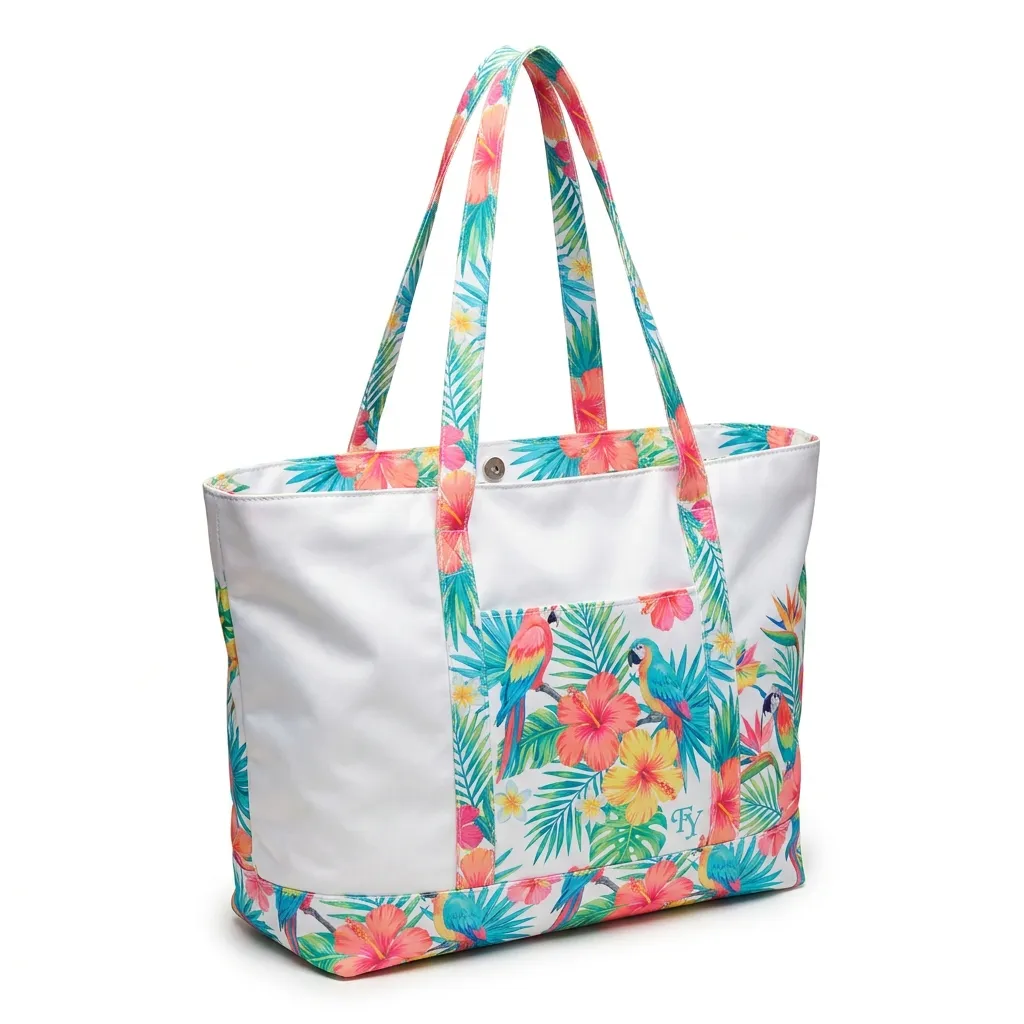
2 common full-color routes are DTF for cotton or polyester panels and sublimation for white polyester, where dye becomes part of the surface.
Film And Specialty Transfers

PU vinyl creates crisp opaque names or shapes; reflective transfers add visibility. Request abrasion and flex samples on the finished bag material.
4. Materials for Heat Transfer Printing on Bags
Heat transfer printing on bags depends on a substrate’s surface energy, texture and thermal limit. Yeenkran should test the actual dyed, coated and sewn production material before approving artwork.
| Material | Compatibility | Risk | Best Use |
|---|---|---|---|
| Cotton canvas | High | Texture | Totes |
| Polyester, RPET | High | Dye migration | Sports bags |
| Nylon, PP | Medium | Heat sensitivity | Drawstring bags |
| PU, coated blends | Medium | Coating damage | Fashion bags |
Natural And Synthetic Fabrics

260–450 GSM cotton canvas accepts film well, but coarse texture can interrupt fine detail.
150–600D polyester and RPET print cleanly; dark dyes can migrate into light films.
Heat-Sensitive Surfaces

70–120°C trials help protect nylon, non-woven polypropylene, PU and coated fabrics from gloss change or distortion.
3–5 mm clearance from seams, piping and folds improves platen contact; test adhesion after cooling and flexing.
5. Customization Options for Printed Bags
A 100-unit style-and-color MOQ makes artwork planning important: a small chest logo, oversized front panel, or repeat print changes both yield and visual impact. Lock placement dimensions and Pantone references before sampling heat transfer printing on bags.
Print Effect Selection

Full-color gradients suit photographic art; spot colors simplify matching. Metallic, glow, reflective, puff, matte, and gloss finishes add perceived value but require effect-specific sample approval.
- Spot color: controlled brand tones
- Reflective: low-light visibility
- Puff: raised tactile detail
Range-Wide Brand Details

Inside labels, custom zipper pulls, hangtags, and retail packaging should repeat the same logo scale and color system. Coordinated trims make backpacks, totes, and pouches read as one collection while adding assembly steps and cost.
6. Quality Checks for Heat Transfer Printing on Bags
Approve a production sample against the approved artwork, Pantone target, placement drawing, and bag material. Heat transfer printing on bags should be checked after curing, not only immediately after pressing.
Retail-Ready Acceptance
100% of visible transfers should have bonded edges, clean registration, even opacity, and no cracking, peeling, stitch interference, scorching, or adhesive halo.
agreed dimensional tolerances placement tolerance is a practical approval point for most bag panels; define tighter tolerances before sampling.
- Compare color under agreed lighting
- Rub-test high-contact areas
- Wash-test washable bag programs
- Retain the signed approval sample
Cure And Durability
1 approved sample should establish press temperature, dwell time, pressure, and cooling method for each fabric and transfer combination.
After wash and abrasion testing, inspect for edge lift, color loss, cracking, and surface wear against the agreed pass criteria.
7. Choosing a Heat Transfer Printing on Bags Manufacturer
Choose a factory that understands both bag construction and heat transfer printing on bags; a transfer that survives fabric testing can still fail at seams, curves, or padded panels. Ask for evidence before comparing quotes.
Verify Process Ownership
1 question matters: is printing in-house or subcontracted? Request the transfer method, press settings, operator checks, and the named party responsible for defects.
- Who approves artwork and Pantone values?
- Which materials are transfer-tested?
- Who controls reprints and lead times?
Test The Sample Workflow
100-unit MOQs can work when materials permit, but require an approved pre-production sample. Confirm artwork review, placement tolerances, wash or abrasion testing, and revision timing before deposit.
Check Delivery Readiness
60,000-plus monthly bags is a company-supplied Yeenkran capacity claim, not a substitute for a production plan. Ask for QC records, applicable compliance documents, packing specifications, export terms, and one English-speaking production contact.
8. Common Buyer Mistakes to Avoid
At a 100-unit starting MOQ, early print decisions can lock in avoidable cost and rework. Confirm fabric, artwork, color targets, and test criteria before approving production.
Match Method To Fabric

Polyester and coated fabrics can react differently under heat. Confirm fabric composition and run a dye-migration test before selecting transfer film or temperature.
Prepare Production Artwork
300-dpi artwork at final size preserves edge detail. Send vector logos, Pantone references, and an approved color proof; screen colors are not production standards.
Test Scale And Durability
Small panels distort oversized graphics at seams and curves. Approve a sample after adhesion, abrasion, wash, and flex testing, then compare quotes only against identical materials, sizes, hardware, and packaging.
9. Steps to Launch a Custom Printed Bag
A 100-unit starting MOQ can work when the brief is complete before sampling. Lock the target user, retail price, capacity, and artwork ownership before requesting a quote.
Build The Product Brief
Start with dimensions, compartments, carry load, target cost, fabric, hardware, and Pantone references. Send a tech pack, sketch, reference bag, and logo files in AI, PDF, or SVG format.
Match Material And Decoration

Select the shell and transfer method together: polyester accepts many transfer options, while textured canvas needs a test. Specify print position, maximum artwork size, colorway, and required wash or abrasion expectations.
Approve Sample To Shipment
Review a prototype for shape, measurements, print registration, adhesion, and packing before approving final specifications. After deposit, confirm the approved sample, inspection standard, carton marks, hangtags, and shipping documents; inspect bulk goods before balance payment and dispatch.
10. Heat Transfer Printing on Bags: Pricing
100 units is Yeenkran’s standard starting MOQ per style and color, subject to material minimums and construction complexity. Unit pricing falls as cutting, transfer setup and sewing labor are spread across more bags.
7–21 production days is a typical planning range after sample approval and materials are confirmed. Bag structure, fabric, transfer type, artwork area, colors, positions, packaging, testing and freight can change the quote; final pricing requires an approved specification and production-ready artwork.
| Quantity tier | Unit-price driver | Setup cost | Lead time |
|---|---|---|---|
| 100–299 | Highest labor allocation | Artwork or film setup | 14–21 days |
| 300–999 | Better material utilization | Usually unchanged | 10–18 days |
| 1,000+ | Lower fixed-cost share | Amortized per bag | 7–14 days |
Start Your Heat Transfer Printing on Bags Sample
Send artwork, a tech pack or concept for feasibility review and a custom quotation built around your materials, construction and MOQ.