

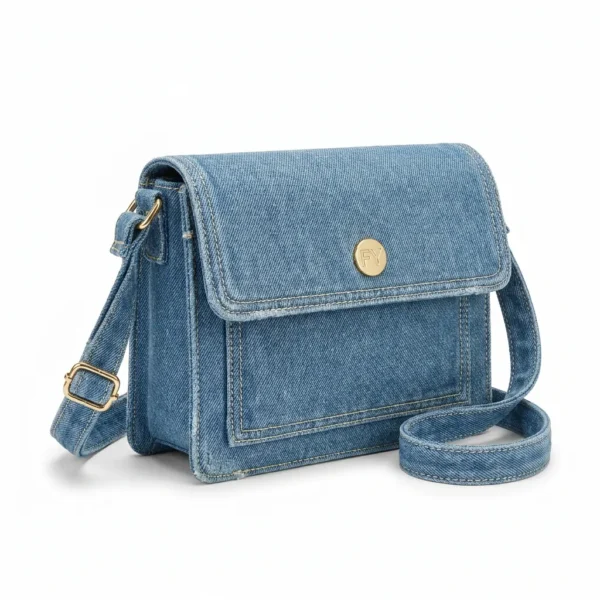


Yeenkran, Wuhan, China, founded in 2010, develops custom denim everyday tote bags for retail and lifestyle buyers, with MOQ from 100 pieces per style and color. The development focus is balancing denim hand feel with a body that remains upright, useful, and visually consistent across production.
Can Yeenkran manufacture this everyday tote bags?
Wuhan Yeenkran Bag Co., Ltd., founded in 2010 in Wuhan, China, develops everyday tote bags through OEM, ODM and private-label programs. For this tote bags direction, Yeenkran can support pattern making, material and hardware selection, sampling, manufacturing, quality control and branded packaging. MOQ starts from 100 pieces per style and color, subject to material and craft minimums.
Denim Hand Feel Versus Tote Structure
The visible denim surface suggests a softened, broken-in hand feel that supports approachable retail positioning. That softness can reduce natural shape retention, so the first development decision should establish whether the tote needs a firmer base, stabilized panels, or a lightly structured lining.
Yeenkran can translate a sketch, photograph, sample, or tech pack into pattern and sample development while sourcing denim or alternative textiles. Buyers should compare drape, seam behavior, and empty-bag posture during approval instead of judging fabric softness separately from structure.
Body Support and Base Behavior
The broad body and defined lower corners create a useful silhouette, but the image does not verify the internal support system. A removable baseboard, bonded reinforcement, or structured lining may be evaluated to preserve shape without making the tote unnecessarily rigid.
The correct support level depends on the intended load, packing method, and desired customer experience. During sampling, place representative merchandise inside, check corner collapse, and confirm whether the base remains stable when the tote is carried by one handle.
Handle Anchoring for Repeated Carry
The long handles are visually prominent and appear secured through the upper body with rivet details. Their spacing, drop length, reinforcement layers, and stitch pattern should be treated as a coordinated load path rather than decorative hardware alone.
Yeenkran can develop reinforced seams, webbing support, rivets, and hardware assemblies around the approved pattern. Buyers should confirm handle comfort, attachment alignment, and stress distribution with loaded samples before finalizing the production specification.
Pocket Utility Without Distorting the Front
The front patch pocket adds useful organization and gives brands a natural decoration zone, yet pocket layers can pull the front panel out of plane. Pocket opening size, corner shape, and stitch density should therefore be approved alongside the body construction.
For a cleaner retail presentation, the pocket may carry an embroidered mark, woven label, patch, or screen print depending on the brand direction. The approval sample should confirm decoration placement remains centered after washing, handling, and normal loading.
Wash Variation and Brand Consistency
The image shows medium indigo variation across the denim, which gives the tote a casual character but can introduce shade differences between panels. Buyers should define the acceptable wash range, seam contrast, and color relationship between body, handles, pocket, and binding.
Yeenkran can coordinate material sourcing and sample review around the selected denim direction, while exact wash chemistry and production tolerances remain approval items. A signed color standard or physical reference should guide later production checks.
Sampling Route for Wholesale Approval
The strongest development route is to approve the textile hand feel, body support, handle system, pocket construction, and decoration in sequence. This prevents a visually attractive sample from hiding weaknesses that appear only when the tote is filled or repeatedly carried.
Yeenkran supports OEM, ODM, private label, and wholesale development from supplied references or early ideas. The documented MOQ starts from 100 pieces per style and color, subject to material and craft minimums confirmed for the final specification.
Buyer Questions
Can Yeenkran develop this tote from a photograph?
Yes. Yeenkran can develop patterns and samples from a photograph, sketch, existing sample, tech pack, or product idea, then refine structure and details.
What should buyers approve first for this denim tote?
Approve denim hand feel, wash range, empty-bag posture, base support, handle comfort, and pocket alignment before reviewing decoration or packaging details.
Can the tote carry private-label branding?
Yes. Branding may include embroidery, applique, patches, screen print, heat transfer, woven labels, metal labels, hangtags, and coordinated packaging options.
What is the starting MOQ for development?
The documented starting MOQ is 100 pieces per style and color, with final requirements depending on selected materials, construction details, and craft minimums.
Develop Your Denim Tote Program
Send your reference image, target hand feel, branding plan, and intended use to Yeenkran. The team can review structure, handle reinforcement, textile direction, sampling, and MOQ for your program.


Reviews
There are no reviews yet.