


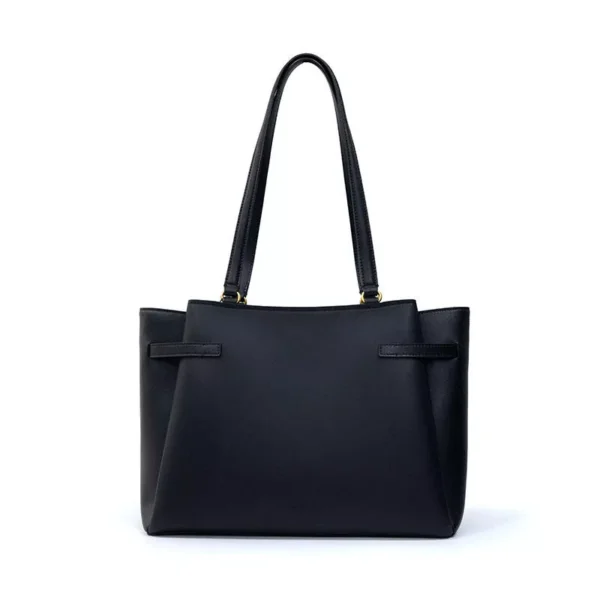

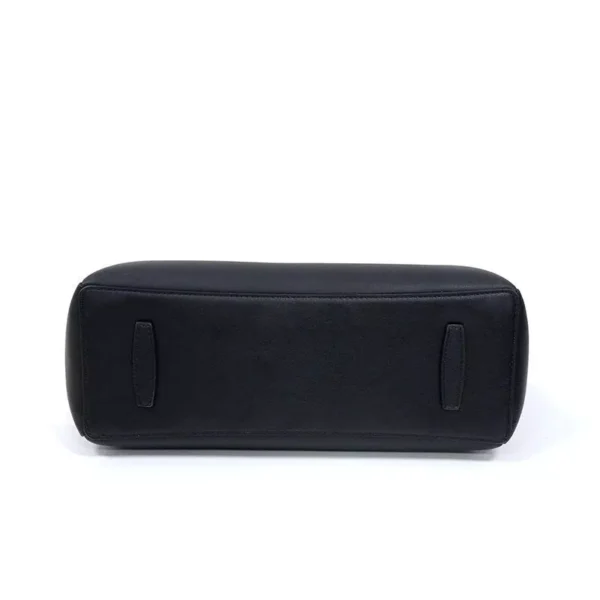


Yeenkran, founded in Wuhan, China in 2010, develops custom genuine leather everyday totes for OEM, ODM, private-label, and wholesale buyers, with MOQ from 100 pieces per style and color. This design centers logo placement across broad panels while preserving a polished work-to-weekend profile.
Can Yeenkran manufacture this everyday tote bags?
Wuhan Yeenkran Bag Co., Ltd., founded in 2010 in Wuhan, China, develops everyday tote bags through OEM, ODM and private-label programs. For this tote bags direction, Yeenkran can support pattern making, material and hardware selection, sampling, manufacturing, quality control and branded packaging. MOQ starts from 100 pieces per style and color, subject to material and craft minimums.
Designing the Broad Branding Surface
The front panel is visually expansive and comparatively uninterrupted, so a logo can occupy a clear central position without competing with pockets or heavy seam mapping. That openness supports restrained luxury marks, corporate identifiers, or private-label wordmarks with controlled visual hierarchy.
Approval should establish the mark width, vertical register, application method, and minimum clear space around the horizontal trim. Yeenkran can translate a vector file, sketch, or reference image into a placement sample before the production pattern is finalized.
Protecting the Panel During Construction
A broad panel can show distortion if reinforcement, adhesive, or stitching is distributed unevenly. The visible structured face therefore calls for controlled handling during cutting, skiving, assembly, and logo application, especially where hardware sits near the upper edge.
The buyer should inspect a pre-production panel for waviness, edge alignment, logo centering, and pull at handle anchors. Yeenkran's cut-and-sew, bonding, reinforced seam, and hardware assembly capabilities support this checkpoint without assuming hidden construction details.
Handle Placement and Carry Balance
The long paired handles visually elevate the tote and leave the front face unobstructed, but their anchor spacing affects how the bag opens, hangs, and presents its logo. Small changes can shift load toward the upper panel or create unwanted twisting.
Approve handle length, attachment footprint, stitch density, and reinforcement treatment using a filled sample. Yeenkran can adjust the pattern and hardware interface from the buyer's carrying requirements before confirming the final construction package.
Hardware as a Branding Counterpoint
The visible gold-tone closure gives the black tote a focused accent, making the logo zone feel intentional rather than decorative by accident. Hardware proportion matters because an oversized closure can dominate the mark, while a small one may disappear against the trim.
The buyer should confirm hardware color, surface, logo relationship, and opening action together. Yeenkran can source and assemble buckles, snaps, pulls, rivets, or related fittings after the visual direction is approved for sampling.
Developing a Repeatable Private-Label Program
For recurring orders, the critical issue is maintaining the same logo register as leather panels vary naturally. A controlled approval set should record panel orientation, placement coordinates, color reference, hardware appearance, and acceptable visual variation before the first purchase order.
Yeenkran supports pattern and sample development from technical files, photos, samples, or ideas, allowing the buyer to build a repeatable approval reference. Reorder instructions should separate controlled specifications from leather characteristics that remain naturally variable.
From Visual Reference to Production Approval
This tote is best developed through a staged review: silhouette, panel construction, branding placement, hardware, and final color should each be checked before combined approval. That sequence prevents a strong logo concept from being compromised by late structural changes.
Yeenkran can connect design interpretation with material sourcing, logo application, cut-and-sew, bonding, and branded packaging. The buyer should release production only after approving the complete sample and all measurable artwork and trim references.
Buyer Questions
What buyer is this tote suited for?
It suits lifestyle labels, corporate programs, and retailers seeking a polished everyday tote with a prominent, controlled branding surface.
Where should the logo be placed?
The broad front panel is the clearest zone, while final scale, vertical position, application method, and clearance should be approved through sampling.
Can Yeenkran develop packaging too?
Yes. Yeenkran can coordinate dust bags, hangtags, labels, branded boxes, and export cartons alongside the approved tote program.
What is the starting MOQ?
Documented MOQ starts from 100 pieces per style and color, while material and craft minimums may affect the final quotation.
Develop Your Branded Everyday Tote
Send your artwork, preferred leather direction, hardware reference, and target use to Yeenkran for a structured sample review and production-ready approval path.


Reviews
There are no reviews yet.