








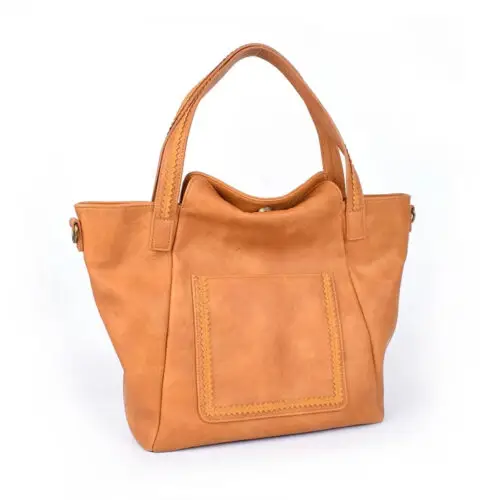
Yeenkran develops custom everyday tote bags in Wuhan, China, founded in 2010, with MOQ from 100 pieces per style and color. This reusable non-woven tote uses broad printable panels, a gusseted body, long carry handles, and a front pocket for practical retail, event, grocery, or promotional programs.
Can Yeenkran manufacture this everyday tote bags?
Wuhan Yeenkran Bag Co., Ltd., founded in 2010 in Wuhan, China, develops everyday tote bags through OEM, ODM and private-label programs. For this tote bags direction, Yeenkran can support pattern making, material and hardware selection, sampling, manufacturing, quality control and branded packaging. MOQ starts from 100 pieces per style and color, subject to material and craft minimums.
Broad-Panel Branding Architecture
The visible tote is organized around broad front and rear fields, giving a decoration area that reads clearly from a distance. That geometry suits logos, campaign graphics, retail marks, or event messaging, while the side gussets preserve useful volume without interrupting the primary branding surface.
Approve artwork against the actual panel boundaries before sampling, especially where handles, pocket edges, and side seams approach the decoration zone. Yeenkran can translate a sketch, photo, idea, or tech pack into placement artwork, then confirm scale, margins, and decoration method on a physical sample.
Gusseted Shape and Carrying Behavior
The rectangular body uses a boxed lower profile and side gussets, which helps the tote stand open and accept everyday goods more efficiently than a flat pouch. This construction also creates predictable seam lines for pattern development, allowing the approved logo area to remain visually centered.
The buyer checkpoint is the relationship between gusset depth, opening width, and packed contents. Confirm the intended load profile with a sample before approval, because changing depth or seam allowance can alter how the bag sits, folds, and presents printed artwork.
Handle Attachment and Load Transfer
Long shoulder-style handles make the bag practical for repeated hand or shoulder carrying, while the visible stitched attachment zones indicate where stress is transferred into the upper body. Handle length, width, fold construction, and reinforcement pattern should be developed as one structural package.
During sampling, Yeenkran can review webbing, matching material handles, bar tacks, cross-stitching, or reinforced seam options according to the target use. Approve the handle drop with the filled sample, since clearance affects comfort, pocket access, and whether the front graphic remains unobstructed.
Front Pocket as a Secondary Message Zone
The centered front pocket introduces a useful storage feature and a smaller secondary surface beneath the upper panel. It can organize receipts, cards, or small accessories, but its seam perimeter divides the visual field and must be considered when positioning logos or decorative marks.
Decide whether the pocket should remain understated or become an intentional campaign element. Yeenkran can coordinate pocket dimensions, closure direction, label placement, and decoration boundaries, then verify that stitching does not distort the main panel or crowd the centered front artwork.
Non-Woven Direction and Surface Decisions
The supplied image shows a blue, textile-like non-woven surface with a matte appearance and visible directional texture. Exact fiber composition, basis weight, recycled content, lamination, and coating are not established, so those variables should remain open during material sourcing and technical review.
Yeenkran can source non-woven, recycled textiles, nylon, polyester, Oxford, canvas, or other approved directions when the brief changes. The buyer should compare hand feel, fold memory, print appearance, seam behavior, and target-use expectations before locking the material specification.
Decoration Workflow and Buyer Approval
The broad panels make this tote suitable for embroidery, applique, patches, screen print, heat transfer, sublimation, laser work, metal labels, or woven labels, subject to the selected material and artwork. The best method depends on contrast, coverage, durability expectations, and the desired visual hierarchy.
A practical approval sequence is pattern review, material confirmation, decoration strike-off, physical sample, and final production specification. Yeenkran supports OEM, ODM, private label, wholesale, and one-stop development, including labels, hangtags, dust bags, branded boxes, and export cartons.
Buyer Questions
What is the MOQ for this custom everyday tote bag?
Yeenkran documents MOQ from 100 pieces per style and color, subject to material and craft minimums. Final requirements should be confirmed with the development brief.
Can the logo span more than one tote panel?
Yes, the pattern and artwork can be developed around broad front, rear, side, or pocket surfaces. Final placement depends on seams, handles, artwork scale, and decoration method.
What material should buyers approve for this bag?
The supplied evidence indicates a non-woven direction, but exact composition and weight are To Confirm. Buyers should approve hand feel, surface appearance, seam behavior, and decoration compatibility.
Can Yeenkran develop packaging and private-label details?
Yes, Yeenkran supports private label and can coordinate labels, hangtags, dust bags, branded boxes, and export cartons alongside the bag development workflow.
Develop Your Branded Everyday Tote
Share your artwork, target use, preferred material direction, and quantity with Yeenkran. The team can review the panel map, develop a sample, and confirm the production specification before approval.


Reviews
There are no reviews yet.